
There’s a pattern every high-mileage LML Duramax owner recognizes: at around 40,000 miles, the coolant level starts dropping. No puddle under the truck, no obvious leak — just a slow, mysterious disappearance. By 50,000, the surge tank needs topping off every other fuel stop. The diagnosis? Cracked EGR cooler, leaking coolant into the intake. The quote from the dealer? Anywhere from $1,800 to $3,200.
Then it happens again at 80,000. And 120,000. Each time you’re paying labor to access a buried component bolted to the back of the engine, and each time you’re bolting in the same flawed design that’ll fail again on the same schedule.
The alternative isn’t another OEM cooler. It’s a quality EGR delete kit — installed once, never touched again.
Why the LML EGR Cooler Is a Revolving Door
The 2011–2016 LML Duramax uses an exhaust gas recirculation system that routes hot exhaust through a liquid-cooled heat exchanger before feeding it back into the intake. In theory, cooling the exhaust gas lowers combustion temperature and reduces NOx formation. In practice, the cooler lives in an environment that punishes every material it’s made from:
Thermal cycling is relentless.
The cooler sees ambient-to-1,200°F swings every drive cycle. Expansion and contraction work the welds and core joints until they crack — it’s not a design flaw so much as an inevitability.
Soot packs the gas side.
Dry exhaust soot accumulates inside the cooler passages, reducing heat transfer efficiency and creating hot spots. Over time, packed soot acts as an insulator that forces the metal to absorb more heat than it was designed to handle.
Coolant-side neglect compounds the problem.
Aged coolant loses corrosion inhibitors and becomes acidic. The cooler’s thin-wall passages are among the first components to suffer. Pinhole leaks start small, then propagate.
The intake path pays the price.
When the cooler cracks, coolant enters the intake stream. This isn’t just a slow leak — it’s coolant mixing with intake air, coating MAP sensors, pooling in the intercooler, and in severe cases, causing hydrolock.
Symptoms Your LML EGR Cooler Has Already Failed
Before you spend money diagnosing, check for these telltale signs:
- Unexplained coolant loss — No external leaks, no white smoke, but the surge tank keeps dropping
- White exhaust vapor on cold start — Coolant pooled in the intake burns off as steam
- Sweet smell from the exhaust — Ethylene glycol has a distinct odor when it combusts
- Sludge under the oil cap — Coolant contamination turns oil into milky residue
- Rising EGTs under load — A partially restricted cooler creates backpressure that shows up as elevated exhaust gas temps
- P0401 / P2457 codes — EGR flow insufficient or EGR cooler efficiency below threshold
Any one of these is worth investigating. Two or more? Your cooler is almost certainly compromised.
Replacement vs. Delete: The Math Doesn’t Lie
Here’s what the replacement cycle actually costs over 200,000 miles of LML ownership:
| Approach | Cost per event | Events by 200K | Total cost | Downtime |
|---|---|---|---|---|
| OEM cooler replacement | $1,800 – $3,200 | 4–5 | $7,200 – $16,000 | 4–5 shop visits |
| Quality EGR delete kit | $350 – $600 (kit) + tuning | 1 | $1,000 – $2,000 total | 1 install |
The delete kit pays for itself the first time you skip a replacement. Every mile after that is money you’re not spending on a component that was destined to fail again anyway. And it’s not just money. Each OEM replacement means the truck is down for days, the intake path gets contaminated, and sensors degrade from coolant exposure. A delete kit ends the cycle.
What an EGR Delete Actually Does on the LML
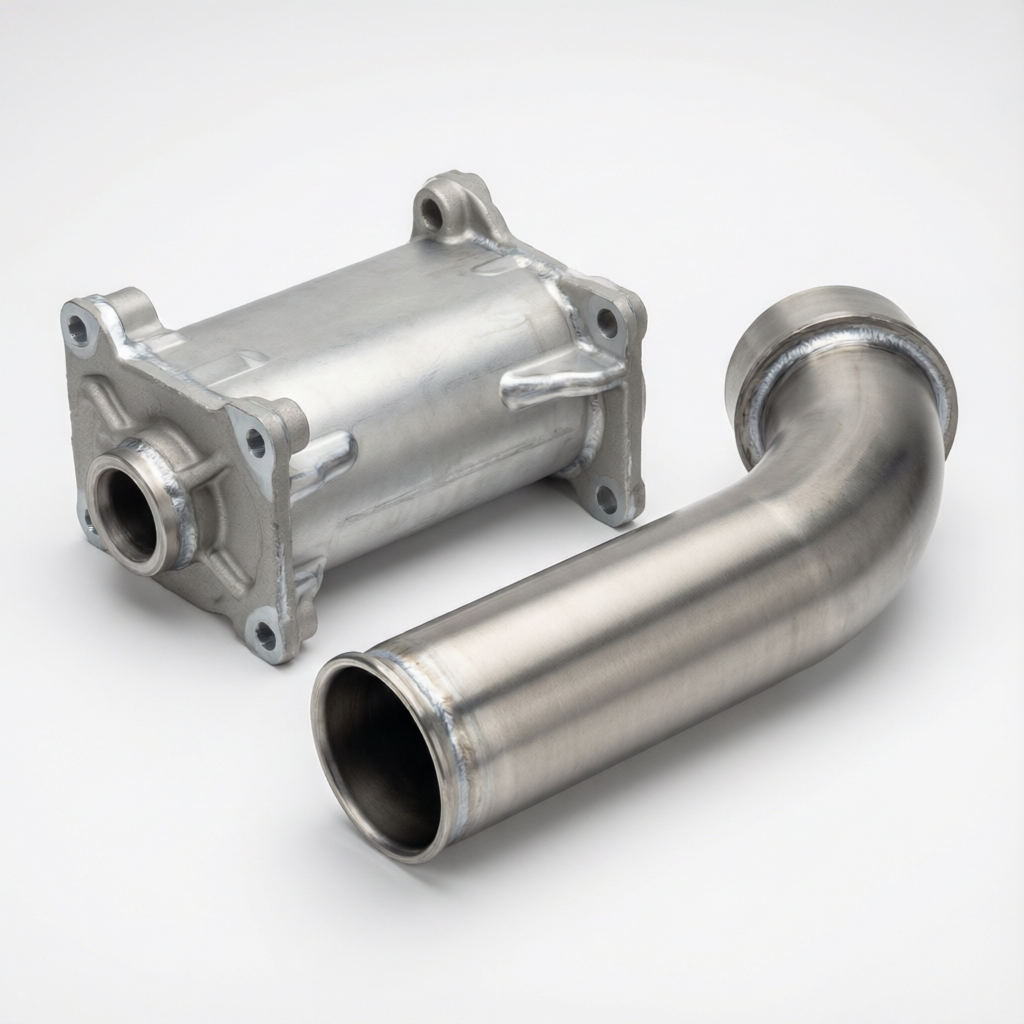
Removing the EGR system on the LML isn’t just blocking off a port. A complete kit replaces the cooler, the EGR valve, and the associated plumbing with precision-machined components that:
- Block exhaust gas from re-entering the intake — No more soot, no more sludge buildup
- Reroute coolant efficiently — Maintain factory cooling loop integrity without the cooler in the path
- Eliminate the failure point entirely — No cooler to crack, no valve to stick, no passages to clog
- Lower intake air temperatures — Without hot exhaust gas mixing in, the intake charge stays cooler and denser
- Improve turbo response — Reduced exhaust backpressure means the turbo spools faster
Critical: The LML ECM is sensitive to airflow and pressure logic. If MAF/MAP behavior, boost pressure, EGR flow expectation, and exhaust pressure feedback no longer make sense together, drivability issues follow. A quality tuner is required — not optional. The delete hardware is half the job; the calibration is the other half.
Two IFJF LML EGR Delete Kits Compared
Whether you’re solving the EGR cooler problem alone or tackling the entire soot-and-sludge cycle in one job, IFJF has a kit engineered specifically for your 2011–2016 LML.
Option 1: EGR Delete Kit | 2011-2016 GM/Chevy Duramax 6.6L
Best for: The owner who’s done replacing EGR coolers on schedule. If your only complaint is coolant loss and you want the problem gone without touching anything else, this is the focused fix.

Materials: Stainless steel · Billet aluminum
What you get:
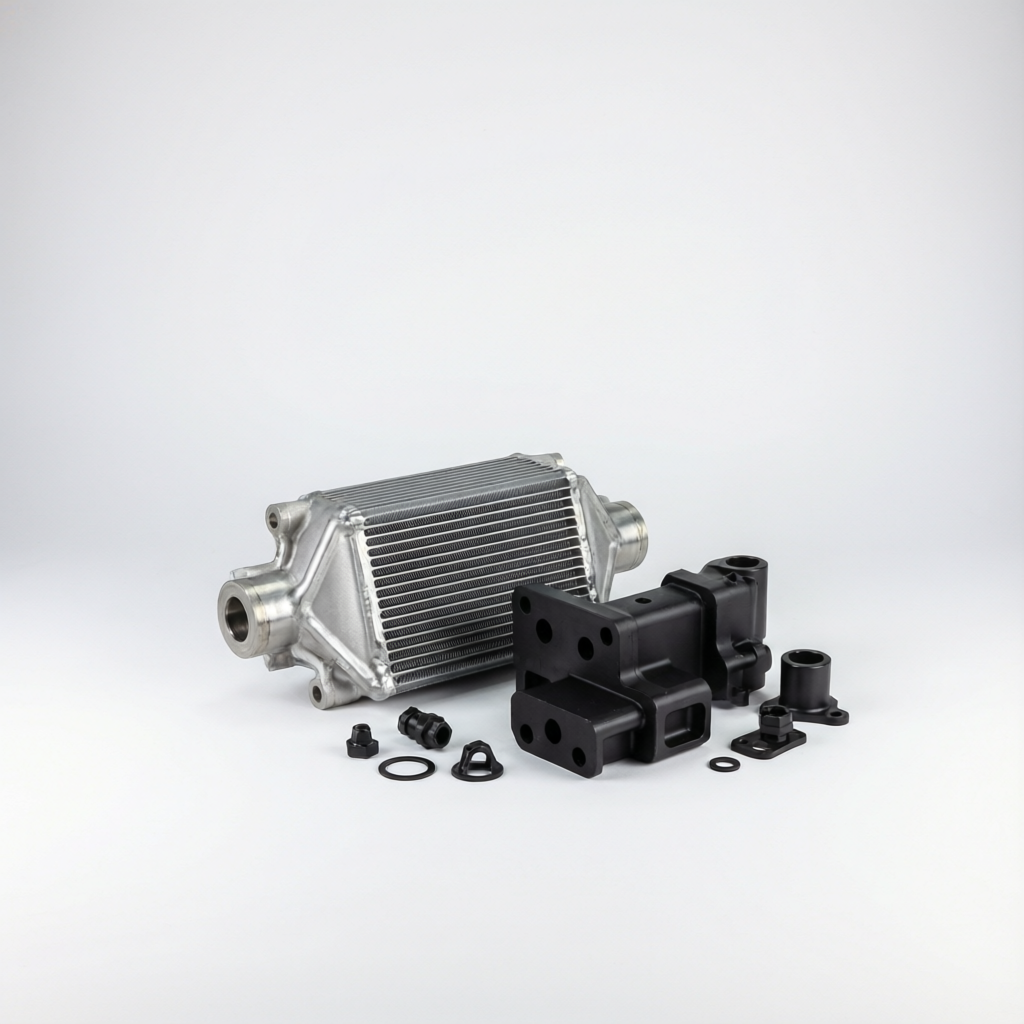
- Complete removal of the EGR system — cooler, valve, and all associated plumbing
- No more plugged or leaking EGR components — the failure point is eliminated entirely
- Quicker turbo spool thanks to reduced exhaust backpressure and lower EGTs
- Faster coolant recirculation post-delete, resulting in lower overall coolant temperatures
- Billet aluminum and stainless construction handles thermal cycling without cracking
The EGR Delete Kit for 2011–2016 GM/Chevy Duramax 6.6L is the straightforward solution — one install, zero future cooler replacements.
Option 2: CCV/PCV/EGR Delete Kit | 2011-2016 GM/Chevy Duramax LML 6.6L
Best for: The owner who wants to solve the entire contamination cycle in one job. If your intake has already been sludged up once and you’re not interested in doing it again, this combo kit addresses the soot source and the oil vapor source simultaneously.

Materials: Stainless steel · Billet aluminum
What you get:
- Full EGR system removal — blocks exhaust from ever re-entering the intake
- CCV/PCV reroute — vents crankcase blow-by gases away from the intake, stopping the oil vapor that binds soot into sludge
- Each component is leak-tested and O-ring sealed for a guaranteed leak-free installation
- Eliminates soot buildup and clogged EGR valves — the contamination cycle is broken at both ends
- Pressure-tested TIG welds on every joint — no pinholes, no mystery leaks
- Coolant temperatures run consistently cooler thanks to optimized flow routing
- Crankcase ventilation improvement decreases oil deposits throughout the engine
This is the comprehensive fix. By addressing both the soot source (EGR) and the sticky binder (PCV oil vapor), the CCV/PCV/EGR Delete Kit keeps your intake path cleaner than a stock truck ever could — even at low mileage.
Which Kit Is Right for Your LML?
-
Option 1 if your EGR cooler has failed (or you just want to prevent it from failing) and the rest of the truck is running clean. It replaces the problematic emissions hardware and nothing else.
-
Option 2 if you’ve already cleaned sludge out of your intake once, or if you tow heavy and want the lowest possible intake contamination. The CCV/PCV side removes the oil vapor that makes EGR soot sticky in the first place — your intake stays cleaner, your sensors stay accurate, and your turbo sees only clean, cool air.
What Else You Need Before Installing
An EGR delete kit is a hardware solution, but the LML’s computer doesn’t know you’ve changed anything. Here’s what else belongs on your checklist:
A compatible tuner.
The ECM monitors EGR valve position, EGR temperature, EGR flow rate, and MAF/MAP correlation. When these signals drop to zero or fall out of expected range, the truck will set codes and may enter reduced-power mode. A quality calibration adjusts these monitoring tables to match the new hardware state.
Intake cleaning.
If your EGR cooler has been leaking coolant or your intake has accumulated years of soot-and-oil sludge, clean it while the components are off. There’s no point installing a delete kit and leaving a restricted intake path behind.
Coolant flush.
The delete kit reroutes coolant flow. This is the ideal time to drain old coolant, flush the system, and refill with fresh fluid — especially if the old coolant contributed to the cooler failure in the first place.
CP4.2 awareness.
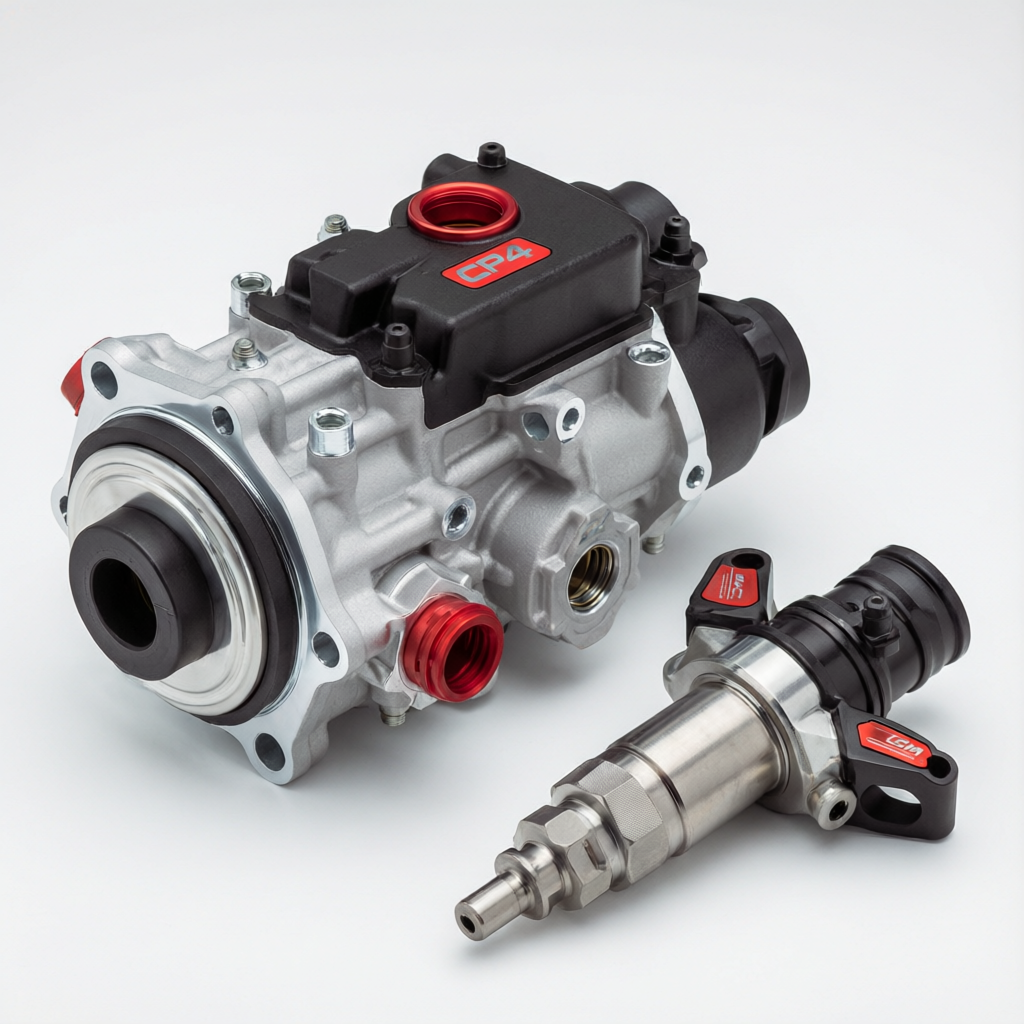
The LML’s Bosch CP4.2 high-pressure fuel pump is a known sensitivity point on this platform. It’s not caused by the emissions system, but if you’re adding power with tuning, make sure your fuel supply path — lift pump, filtration, and lubricity — is solid first.
Conclusion
The LML Duramax is a million-mile engine saddled with a 40,000-mile EGR cooler. Every LML owner eventually faces the same decision: keep paying to replace a component that’s guaranteed to fail again, or fix it once and move on.
If your only complaint is coolant loss and you want the simplest path, the standard EGR Delete Kit is the focused fix. If you’ve already been through a sludge-cleaning once and you want the entire contamination cycle broken — soot and oil vapor — the CCV/PCV/EGR Delete Combo Kit keeps your intake cleaner than factory from day one.
Built for Diesel, Backed by Engineering
Every IFJF kit is designed for a specific platform — not universal-fit, not catalog filler. At IFJF.com, you’ll find:
- Precision-Machined Components — Billet aluminum, stainless steel, TIG-welded and pressure-tested — built to outlast the factory parts they replace
- Application-Specific Engineering — Each kit is developed for a single engine platform with fitment verified on real trucks
- Leak-Tested Assemblies — Every component is O-ring sealed and quality-checked so there are no surprises on install day
Frequently Asked Questions
Q1: How long does an LML EGR delete take to install?
A1: For an experienced DIY owner with basic tools, plan 4–6 hours. The EGR cooler is buried at the back of the engine and access requires removing several components. A shop familiar with Duramax deletes can typically complete the job in 3–4 hours.
Q2: Will an EGR delete throw a check engine light?
A2: Yes — without tuning. The ECM will detect zero EGR flow and set codes (typically P0401, P0403, P0404, P0405). A compatible tuner is required to adjust the ECM calibration for the hardware change. With proper tuning, the MIL stays off and the truck runs clean.
Q3: Will I see better fuel economy after an EGR delete?
A3: Most LML owners report modest MPG improvements — typically 1–2 MPG on the highway — because the engine breathes cleaner, cooler air and the turbo works against less backpressure. But fuel economy depends heavily on tuning, driving style, and load. Don’t expect dramatic savings; expect consistent, predictable operation.
Q4: Does deleting the EGR affect coolant temperature?
A4: Yes — in a positive way. The EGR cooler dumps exhaust heat into the cooling system. Removing it reduces the thermal load the radiator has to handle, and a well-designed delete kit reroutes coolant for faster circulation. Owners typically see 5–15°F lower coolant temps under sustained load.
Q5: What’s the difference between deleting just the EGR and also deleting the CCV/PCV?
A5: Deleting only the EGR removes the soot source from the intake. Deleting the CCV/PCV in addition removes the oil vapor that makes soot sticky. Together, they break the contamination cycle at both ends. If you’ve already had intake sludge problems, or you tow heavy and want the cleanest possible intake path, the combo kit is worth the extra step.
Q6: Is an EGR delete legal on a street-driven LML?
A6: Modifying emissions control systems on vehicles operated on public roads may violate EPA regulations under the Clean Air Act. IFJF products are designed for off-road and competition use only. Always verify federal, state, and local regulations before modifying emissions equipment.