
Here’s a mistake that costs people a week of downtime and hundreds in return shipping: ordering an ISX15 EGR delete kit, unboxing it, pulling the truck into the bay, and then discovering their tuning solution won’t work because they guessed wrong about which ECM generation is under the hood.
The 2010–2026+ heavy-duty Cummins 15L platform (ISX15 and its successor, the X15) actually spans three distinct ECM generations: the CM2250 (2010–2012), the CM2350 (2013–2019), and the newer, military-grade encrypted CM2450 (2020+).
CM2250 vs. CM2350: What’s Actually Different
Both the CM2250 and CM2350 are Bosch engine control modules mounted on the intake side of the ISX15. The physical form factor is nearly identical — same bolt pattern, same connector layout, same external dimensions. The difference is the internal processor, the calibration architecture, and crucially, how they handle delete tuning.
CM2250 (2010–2012)
The CM2250 runs on an older 32-bit Bosch EDC17 architecture. These ECMs are well understood by the aftermarket — tuning tools have been reading and writing to them for over a decade. The CM2250 does not have a bootloader lock from the factory, meaning:
- Direct OBD-II flash is possible on most calibrations without bench unlocking
- EFILive, HP Tuners, and legacy Insight/CTS2-based platforms all support it
- Delete tuning files are widely available from calibrators who’ve been writing them since these trucks were new
- A delete tune can typically be loaded in under 15 minutes through the diagnostic port
If you have a 2010–2012 ISX15, the tuning half of your EGR delete is straightforward. The aftermarket has solved the CM2250.
CM2350 (2013–Present)
The CM2350 moved to a more capable 32-bit TriCore processor with expanded flash memory and a fundamentally different calibration structure — but the bigger change is the bootloader security. Starting around 2015, Cummins began shipping CM2350 ECMs with locked bootloaders that prevent aftermarket tools from writing over the OBD-II port.
What this means:
- 2013–2014 CM2350s: Many are still OBD-II flashable with the right tool and the right calibration version. EFILive V3 with the ISX15 CSP5 patch covers most early CM2350s.
- 2015–2018 CM2350s (2350B): The bootloader is typically locked. OBD-II flashing is blocked. The ECM must be removed from the truck, opened, and bench-flashed via BDM (Background Debug Mode) or boot-pin — a process that requires opening the ECM housing and connecting directly to the processor’s test pins.
- 2019–present CM2350s (2350C): Fully locked. Most require the ECM to be sent to a specialty service for unlock. Bench time, shipping both ways, and unlock fees typically run $400–$800 and add a week to your timeline.
This is the trap: someone with a 2017 ISX15 orders a delete kit, assumes “it’s all the same,” tries to flash a delete tune through the OBD-II port, gets a write error, and ends up with an ECM that’s partway through a failed flash. That’s a tow to a shop with the right bench equipment — or a replacement ECM at $2,500+.
How to Identify Your ECM
You can’t go by model year alone. ECMs get swapped, rebuilt trucks mix generations, and some early 2013 trucks left the factory with leftover CM2250 stock. Here’s how to be certain:
Method 1: Data Plate (Most Reliable)
Pop the hood and look at the ECM itself — it’s mounted on the intake side of the engine block. The data plate on top of the ECM housing will show the Cummins part number. The key identifier is the first six characters:
-
CM2250 part numbers begin with:
3684XXX,3685XXX, or4988XXXon the newer service replacement units -
CM2350 part numbers begin with:
3687XXX,3688XXX,5293XXX, or5442XXX
If the data plate is gone or unreadable, move to method 2.
Method 2: Diagnostic Tool Read
Plug in any J1939-compatible scan tool (Nexiq USB Link, DPA5, or even a basic Bluetooth adapter with the right app). Connect to the engine ECU and read the calibration identifier. The format tells you the ECM family:
-
CM2250 calibrations typically show format:
HD#####.##orCI#####.## -
CM2350 calibrations typically show format:
EF#####.##,EG#####.##, orND#####.##
But the fastest way: read ECM part number through the diagnostic tool. Same prefix logic as method 1 applies.
Method 3: Visual Cues (Less Reliable as a Primary Method)
The CM2250 has a black matte finish on the housing and a single Deutsch 96-pin connector with a gray lever lock. The CM2350 housing is visually similar — slightly different casting marks but not reliably distinguishable from photos alone. If you’re identifying by looking at it, use the part number, not the appearance.
Year vs. ECM Reality
| Model Year | Most Likely ECM | But Check For |
|---|---|---|
| 2010–2012 | CM2250 | Some fleet rebuilds may have been swapped to CM2350 |
| 2013–2014 | CM2350 (early) | A small number of early 2013s left the factory with CM2250 |
| 2015–2018 | CM2350B | Bootloader locked in most calibrations |
| 2019+ | CM2350C | Fully locked; bench unlock required |
Why ECM Generation Determines Your Tuning Strategy
The tuning difference between CM2250 and CM2350 isn’t just about tool compatibility. It affects the entire delete process:
CM2250 (OBD-II flashable):
- Order the delete kit, order a delete tune from a calibrator, schedule one afternoon
- Unbolt EGR hardware, install block-off plates, flash the tune through OBD-II port
- Done. Truck runs. No additional steps.
CM2350 (potentially locked):
- Step 1: Identify which CM2350 variant you have (2350A, 2350B, or 2350C)
- Step 2: Confirm with your calibrator that your specific calibration version is supported
- Step 3: If locked, remove ECM, package and ship to unlock service, wait 3–7 days for return
- Step 4: Only then install the hardware and flash the tune
- Step 5: If you skip step 2, you may own a delete kit and no way to tune the ECM
The kit itself is the same for both — the physical EGR delete hardware doesn’t care which ECM is bolted to the engine. But the sequence of events and the timeline are completely different depending on what you find at step 1.
The Delete Kit That Works Across Both ECM Generations
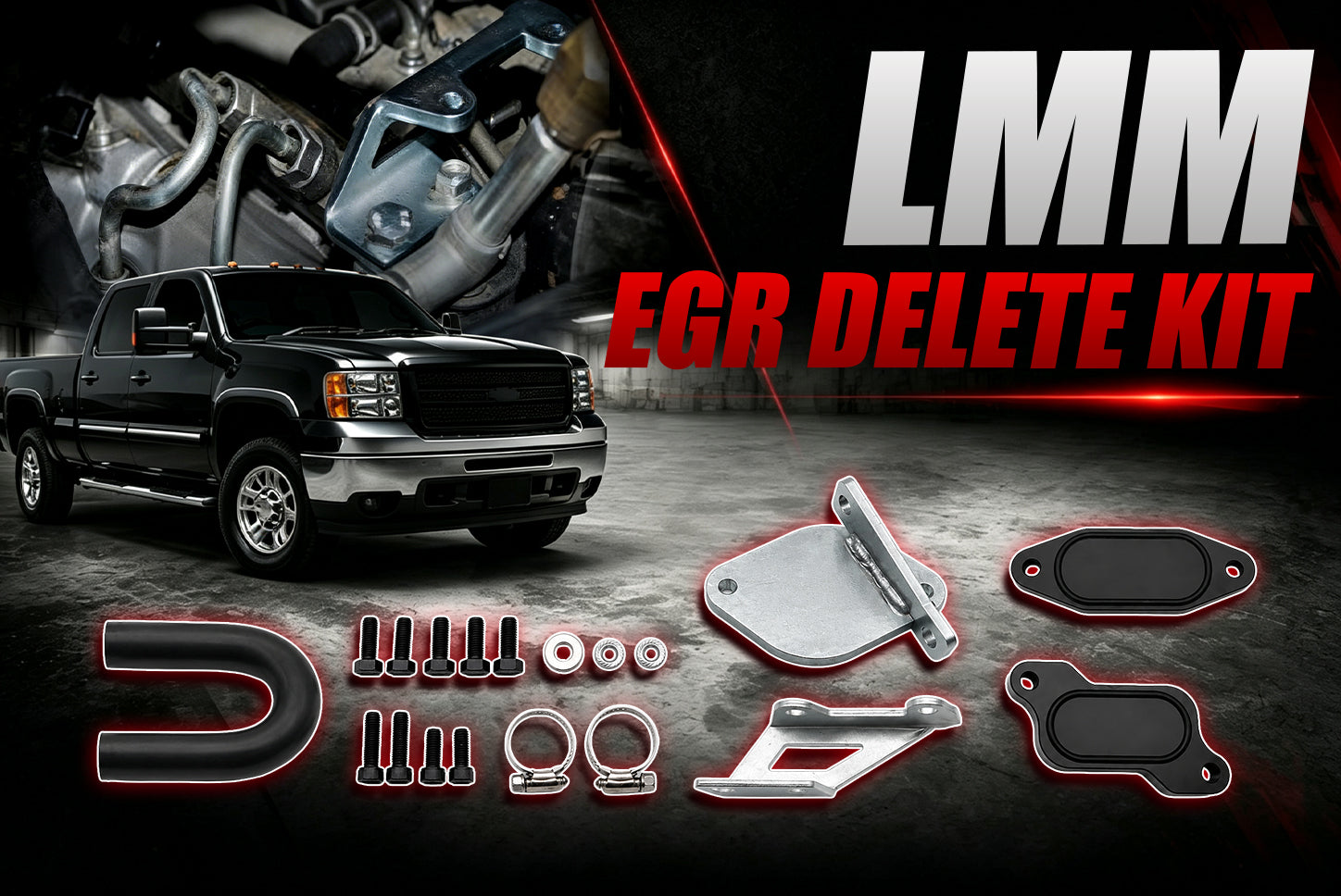
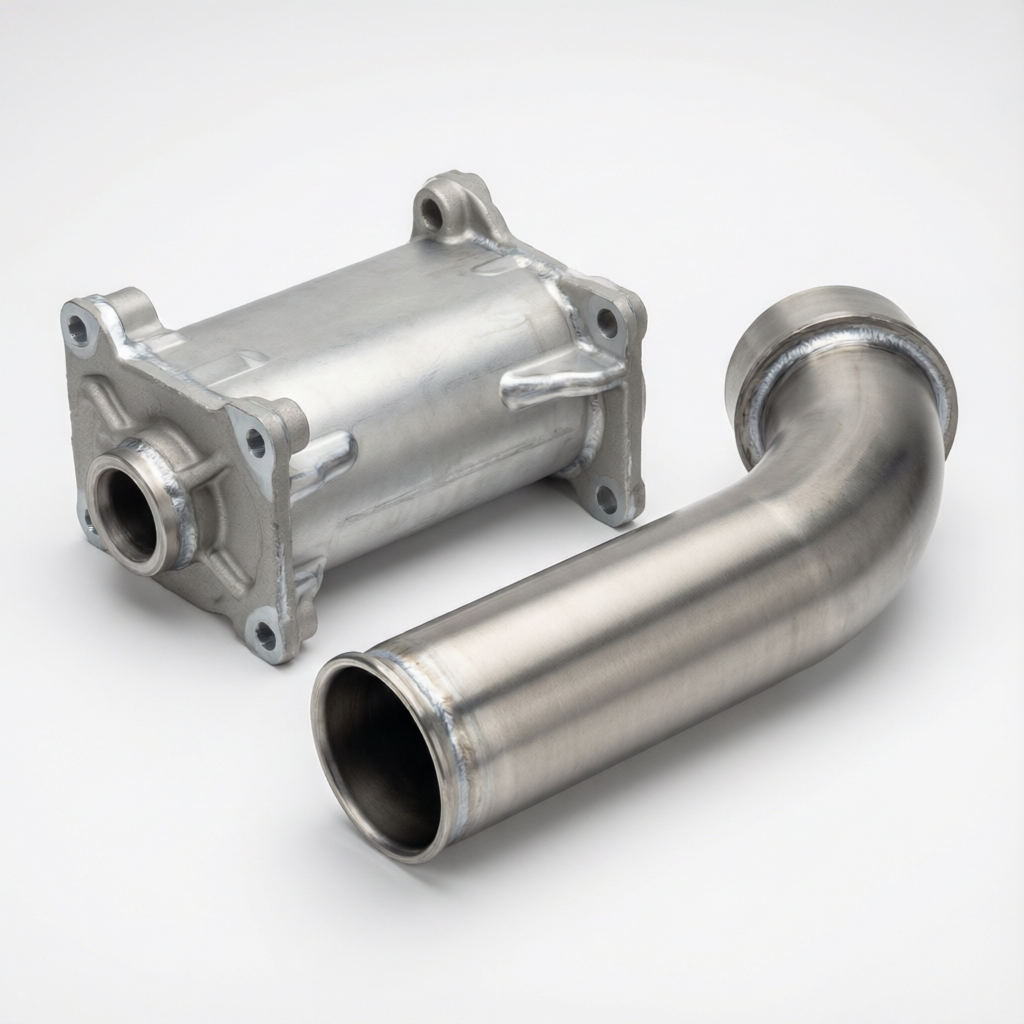
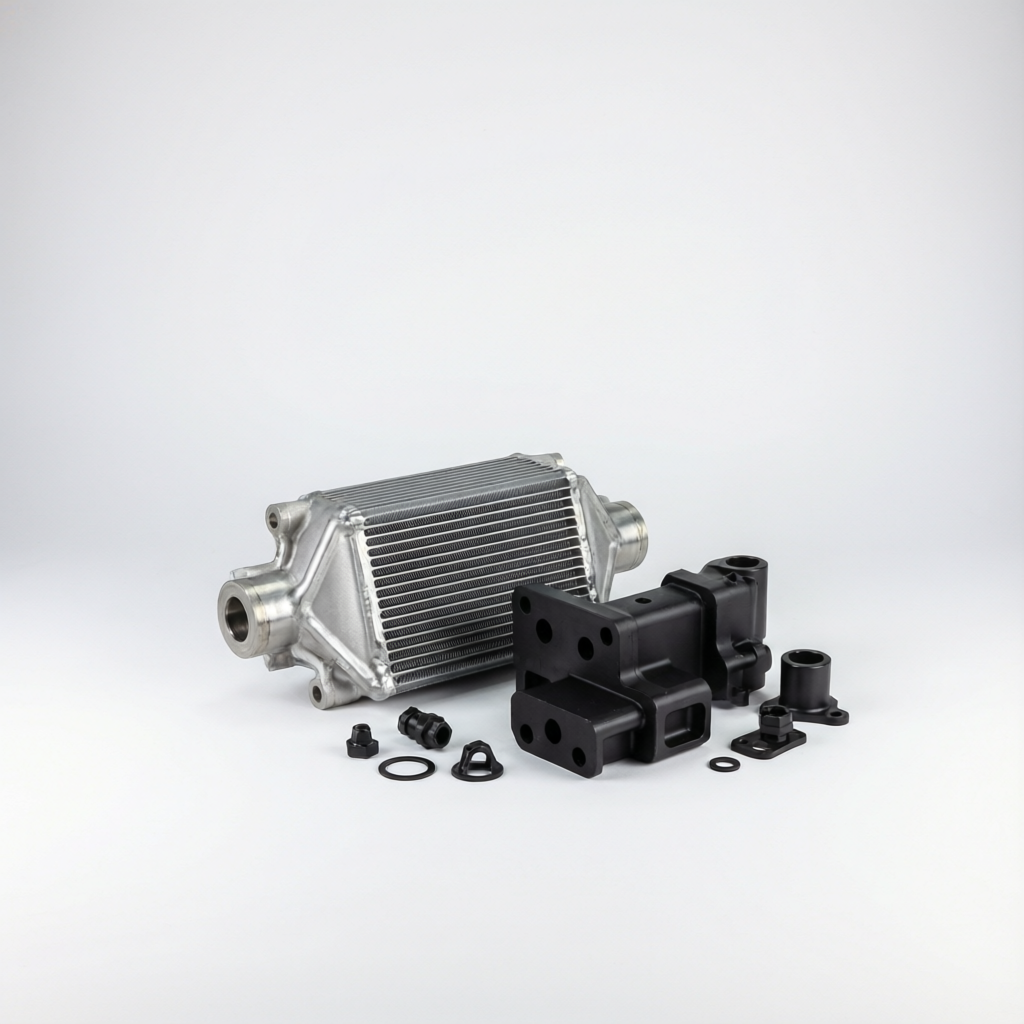
The IFJF ISX15 EGR Delete Kit covers the entire 2010–present ISX15 run — Volvo, Peterbilt, Mack, International, Freightliner, and Kenworth — with a four-plate kit that blocks off both the exhaust and coolant sides of the EGR circuit.

- Two of the block-off plates are machined from 6061 aircraft-grade billet aluminum, anodized for corrosion resistance.
- The other two plates and all five plug fittings are 304 stainless steel — the plugs thread into the coolant passages where the EGR cooler feed and return lines were connected.
- A high-temperature graphite gasket seals the exhaust-side block-off against the manifold face without the blowout risk that comes with paper or composite gaskets at sustained EGT.
The Bottom Line
The ISX15 EGR delete hardware is the straightforward part. The IFJF kit — four plates, five stainless plugs, a graphite gasket — bolts onto any 2010–present ISX15 in an afternoon and permanently eliminates the EGR cooler failures, soot-clogged intake runners, and coolant-in-cylinder risks that the factory EGR system introduces.
The tuning is where CM2250 versus CM2350 matters. A CM2250 flashes through the OBD-II port. A late CM2350 needs a bench unlock before it’ll accept a delete tune — a $400–$800 service and a week of downtime that catches owners off guard when they don’t check first.
Check your ECM part number before you order. It takes five minutes with a flashlight or a scan tool. Guessing based on model year alone is how a one-day job turns into a two-week headache.
Frequently Asked Questions
Q1: What happens if I order a delete kit and my ECM turns out to be locked?
A1: The kit itself is still correct — the hardware fits regardless of ECM generation. The delay is on the tuning side. You’ll need to send the ECM out for bench unlocking before you can flash a delete tune, which adds 3–7 days and $400–$800 to the project. Identify your ECM first, then order.
Q2: Can the same delete kit be used on both CM2250 and CM2350 trucks?
A2: Yes. The EGR plumbing on the ISX15 — cooler mounting, coolant routing, exhaust manifold flange pattern — is the same across ECM generations. The IFJF kit fits 2010–present ISX15 engines regardless of whether they’re paired with a CM2250 or CM2350.
Q3: Do I need a different tune file for CM2250 vs. CM2350?
A3: Absolutely. The calibration file is specific to the ECM platform. A CM2250 delete tune will not load onto a CM2350 ECM, and attempting it will fail — possibly bricking the ECM if the bootloader rejects the write partway through. Make sure your calibrator knows which ECM generation you have.
Q4: Can I visually tell CM2250 from CM2350 by looking at the ECM?
A4: Not reliably. The housings are nearly identical. The only certain visual identification is reading the part number from the data plate on top of the ECM. The first six digits are the giveaway — 3684/3685/4988 for CM2250, 3687/3688/5293/5442 for CM2350.
Q5: Does a 2013 truck always have a CM2350?
A5: Almost always, but not 100%. A small number of early-production 2013 ISX15s left the factory with the previous CM2250 ECM. If you have a 2013 truck, verify the ECM part number rather than assuming based on model year.