
The 2007.5–2010 Duramax LMM has one dirty secret that separates it from every other Duramax generation: wet soot. Not the dry, powdery carbon you’d expect from a diesel EGR system. A thick, greasy, tar-like paste that coats the intake manifold, the intake runners, the valve ports, and the EGR valve itself — narrowing the airflow path with every mile until the engine is breathing through a straw.
The fix isn’t cleaning the intake every 60,000 miles. It’s removing the system that feeds it. Here’s why an LMM EGR delete is the most cost-effective preventive measure you can do on this platform — and the two parts that get the job done right.
Why the LMM Makes Wet Soot Worse Than Other Duramax Generations
Understanding why an LMM clogs its own intake faster than an LBZ or LML requires looking at three things that changed for the 2007.5 model year:
The DPF Added Backpressure
The LMM was the first Duramax with a diesel particulate filter, introduced to meet 2007 EPA Tier 2 emissions standards. A DPF is a ceramic honeycomb in the exhaust stream that traps soot. As it loads with particulate matter, exhaust backpressure rises — and higher backpressure means more exhaust gas gets pushed through the EGR circuit on every cycle.
The PCV System Stayed Open
Unlike the LML (2011–2016), which added a closed crankcase ventilation system with an oil separator, the LMM vents crankcase vapor directly into the intake tract upstream of the turbo. That vapor carries atomized oil droplets — not a lot per cycle, but enough over tens of thousands of miles to create the wet component of wet soot. When hot, dry EGR carbon meets oil mist in the intake plenum, the result is a sticky emulsion that adheres to surfaces.
The EGR Cooler Added Heat, Not Just Gas
The EGR cooler on the LMM drops exhaust gas temperature before it reaches the intake — that’s its job. But it doesn’t remove the carbon particles, and the cooler’s narrow internal passages are themselves a soot trap. As the cooler clogs internally, EGR flow becomes less consistent, the ECM compensates by cycling the EGR valve more aggressively, and the carbon loading in the intake accelerates in a feedback loop.
The practical result: an LMM intake manifold at 100,000 miles can lose 15–25% of its effective cross-sectional area to carbon-and-oil deposits. The EGR valve itself is often the first casualty — caked shut with hardened sludge that prevents it from seating, causing a constant EGR leak even at idle.
What Wet Soot Does to Your LMM
This isn’t cosmetic. The carbon-oil paste accumulating in your intake has measurable consequences:
Lost Throttle Response
A narrowed intake path increases pumping losses. The turbo has to work harder to move the same mass of air through a restricted plenum and restricted intake ports. The delay between pedal input and boost response grows as the restriction grows.
Elevated EGTs Under Load
When the engine breathes a mix of fresh air and hot, oxygen-depleted exhaust gas — which is what the EGR system delivers — combustion temperatures drop slightly, but exhaust gas temperatures downstream rise because fuel that would have burned with excess oxygen is now burning in an oxygen-limited environment. Towing heavy with a partially clogged EGR system is a recipe for EGTs that flirt with the danger zone.
EGR Valve Failure
A carbon-caked EGR valve can’t close fully. The ECM commands it shut, the valve seat is blocked by a crust of hardened sludge, and EGR flow continues — constantly, at all engine speeds and loads. This triggers fault codes, reduces fuel economy, and eventually triggers a derate if the ECM detects EGR flow when none is being commanded.
Intake Manifold and Port Restriction
This is the long-term consequence that a delete prevents entirely. Once the intake manifold and cylinder head ports are coated in hardened carbon-oil sludge, the only fix is physical removal and cleaning — a labor-intensive job that’s several times the cost of a delete kit.
What an LMM EGR Delete Removes
A proper LMM EGR delete removes the entire EGR circuit — not just the valve, not just the cooler — and eliminates every surface where wet soot forms:
-
EGR valve — removed from the intake manifold and the port blocked off. No more valve to cake shut, no more constant EGR bleed at idle, no more stuck-open fault codes.
-
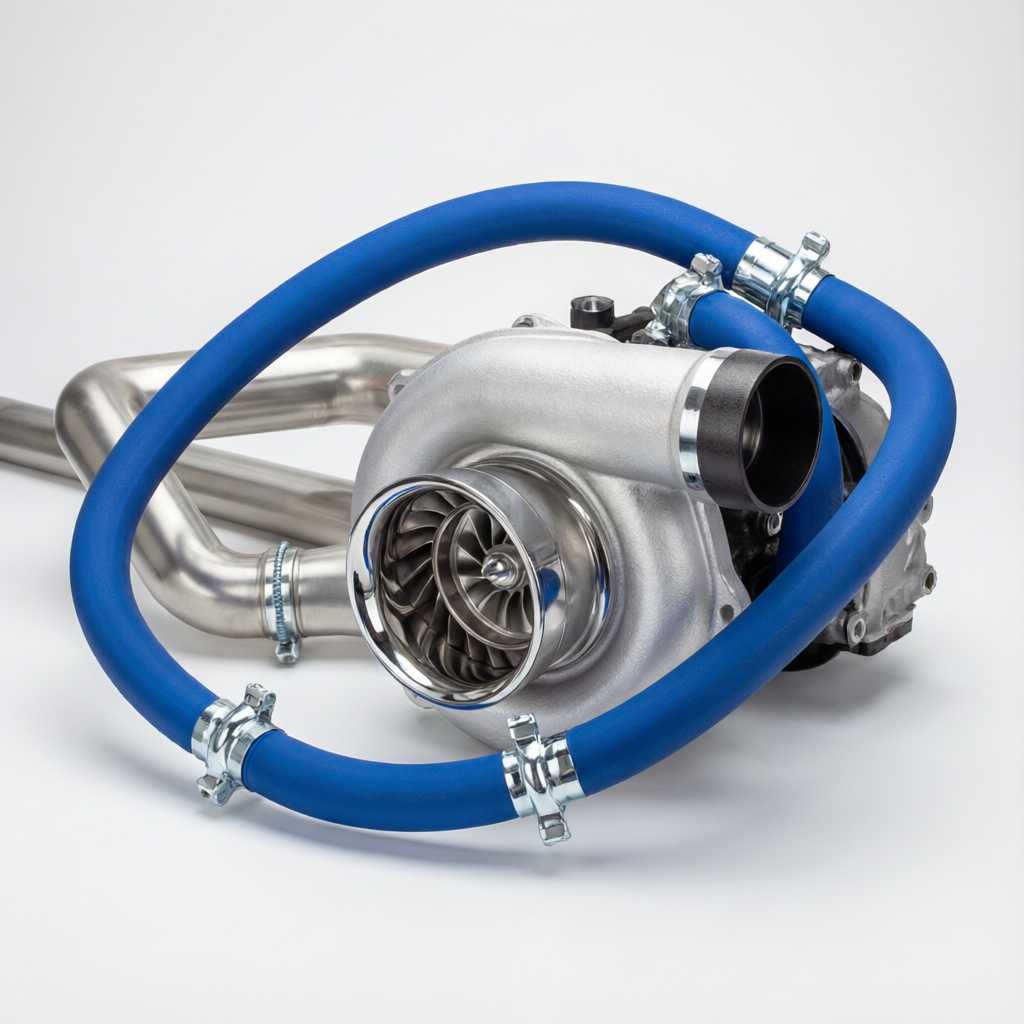
EGR cooler — the heat exchanger mounted at the front of the engine, fed by engine coolant. Removed entirely and the coolant circuit is cleanly re-routed with a heavy-duty bypass hose to maintain proper cooling system flow without localized hot spots.
-
EGR up-pipe and crossover plumbing — the piping that routes exhaust from the passenger-side exhaust manifold, up through the EGR cooler, and into the intake. All removed and replaced with block-off plates at the manifold and intake flanges.
-
ECM EGR monitoring — disabled through tuning. The LMM ECM monitors EGR position, flow, and temperature. Without a tune that disables these monitoring routines, the ECM will detect missing EGR flow and begin a progressive derate sequence.
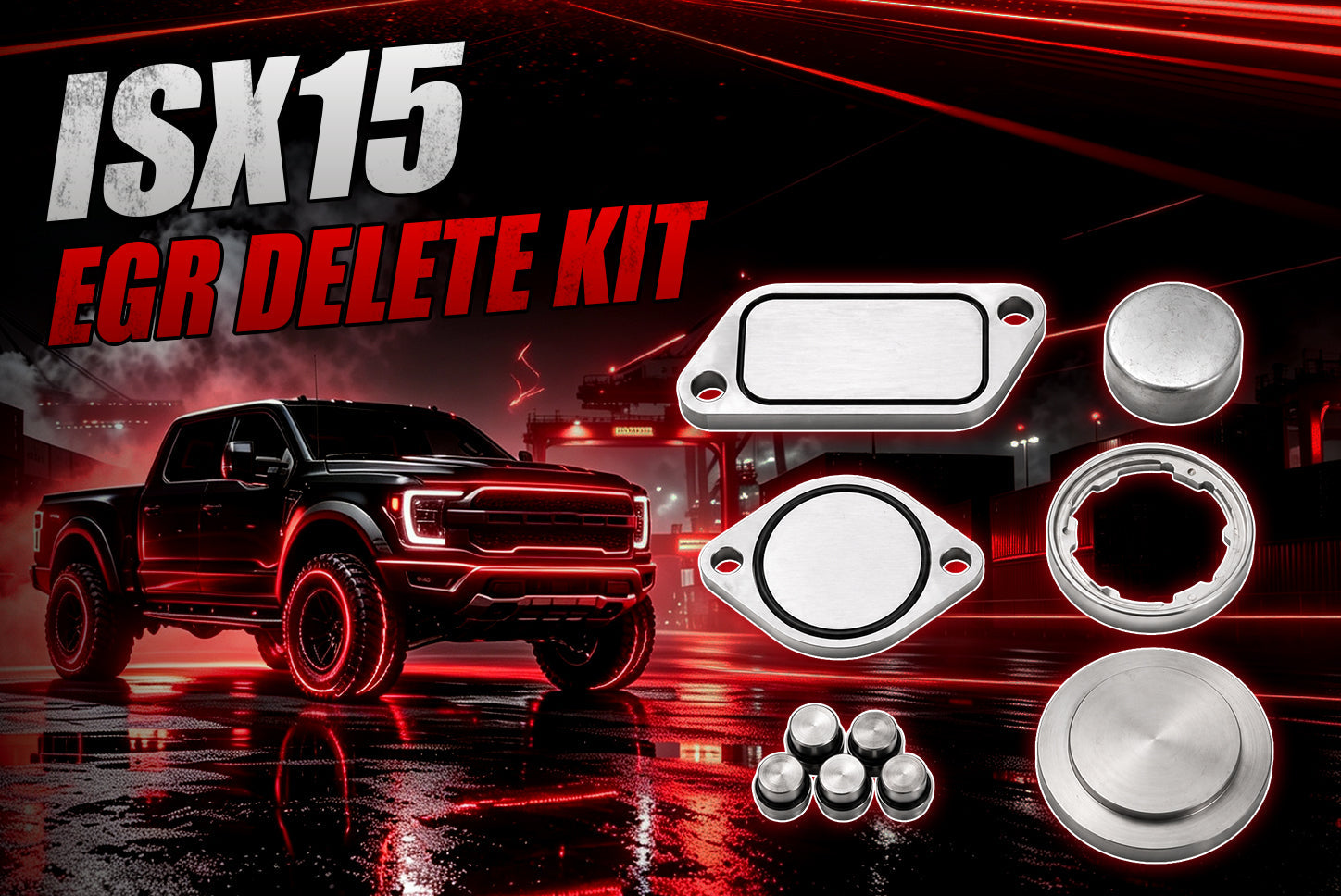
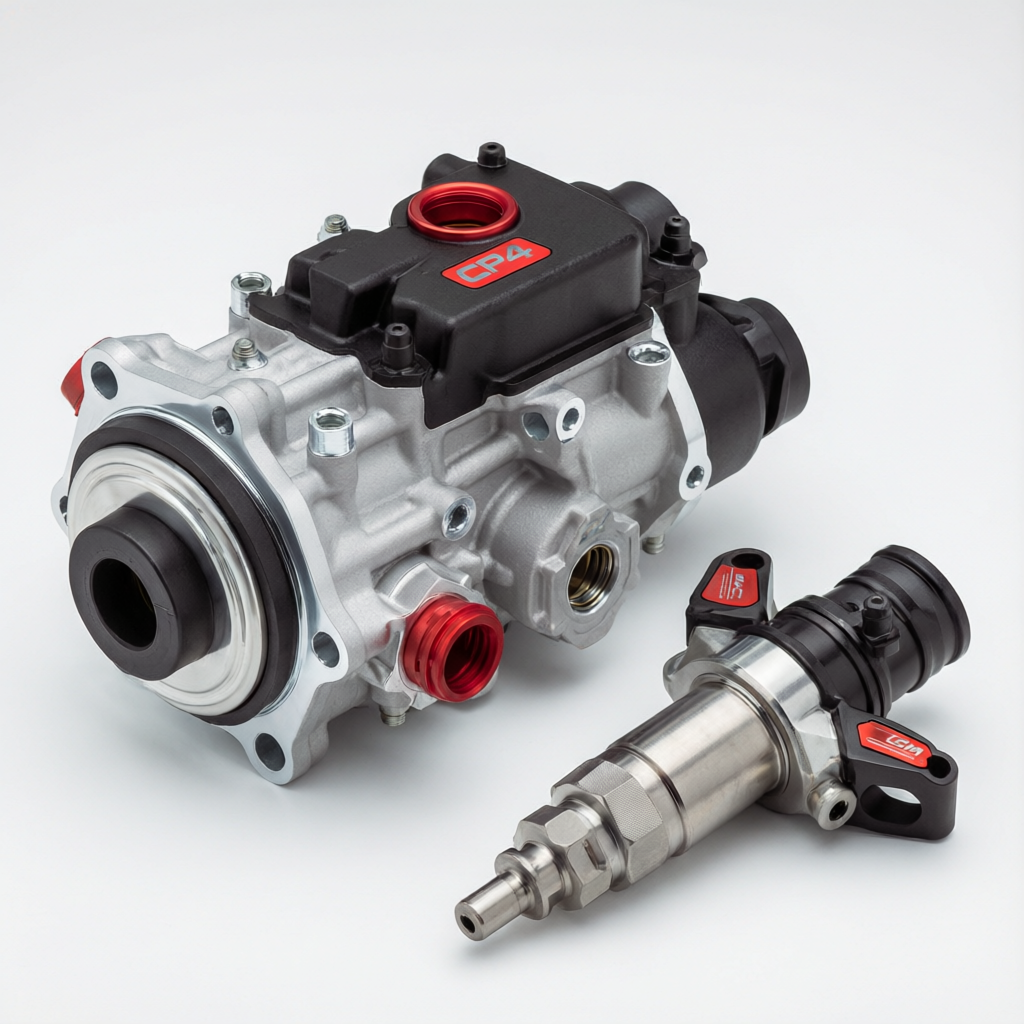
EGR Delete Kit | 2007.5-2010 GM/Chevy Duramax LMM 6.6L
The EGR Delete Kit for the 2007.5–2010 LMM is a complete block-off solution that deletes the EGR valve, EGR cooler, and associated plumbing in one kit. Every component is selected for the thermal and chemical environment of the LMM engine bay.

What’s in the kit:
-
Aluminum alloy block-off plates — precision-cut for exact port matching at the intake manifold and exhaust manifold flanges. The aluminum material handles exhaust-side temperatures without warping and resists corrosion from coolant and condensate exposure.
-
Stainless steel plates and fittings — used at the highest-temperature mounting points and coolant circuit plugs. Stainless is selected for its oxidation resistance under sustained heat cycling — no rust, no scale, no material degradation over time.
-
Silicone gaskets — provide a durable, heat-stable seal at every block-off surface. The silica gel maintains its sealing properties across the full temperature range of the EGR mounting flanges.
Why this matters on the LMM specifically:
-
No exhaust gas enters the intake, no carbon meets oil vapor from the PCV system, and the wet soot formation cycle is permanently broken.
-
The engine breathes exclusively clean, cool intake air. Turbo lag decreases because the intake path is no longer diluted with hot inert gas
-
Exhaust gas temperatures stabilize under load, and throttle response improves measurably with a proper tune.
-
Fuel consumption drops as combustion efficiency increases — the engine no longer has to compensate for oxygen-depleted intake air with additional fueling.
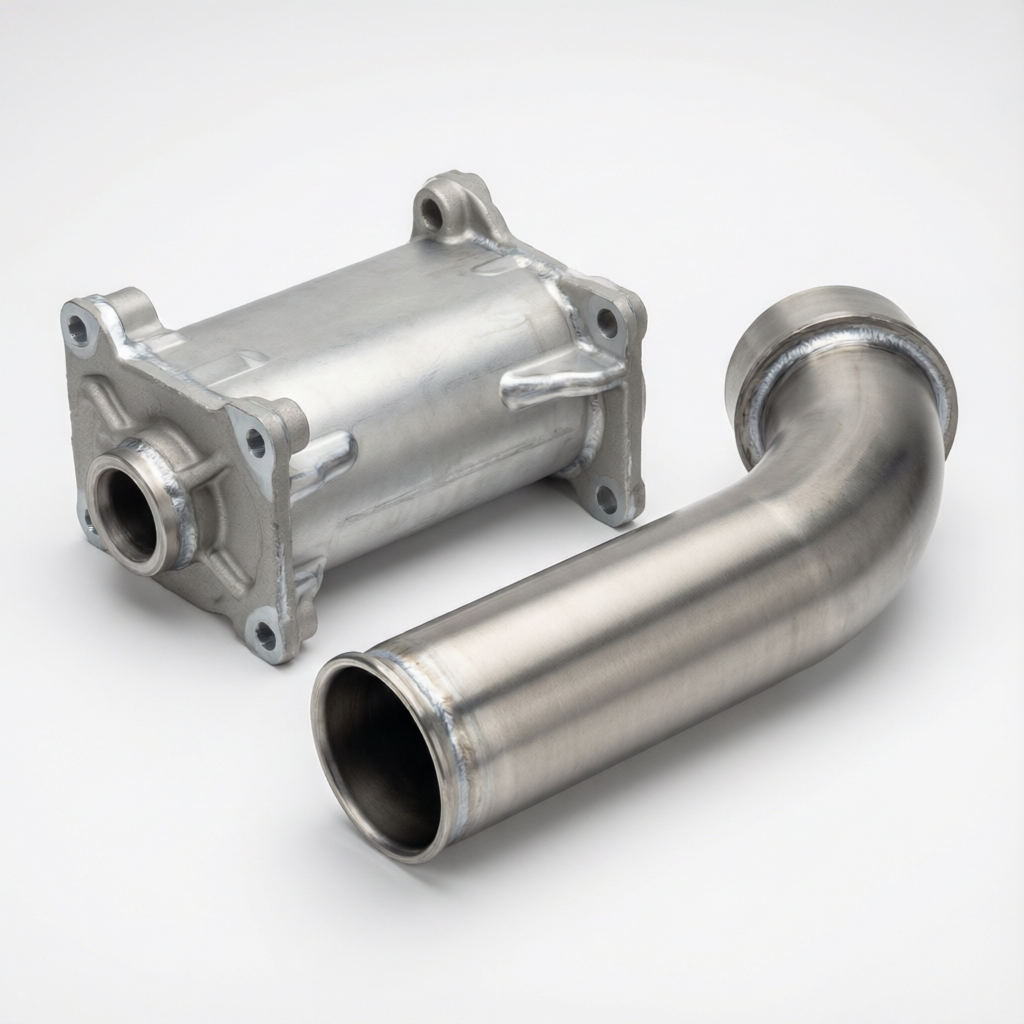
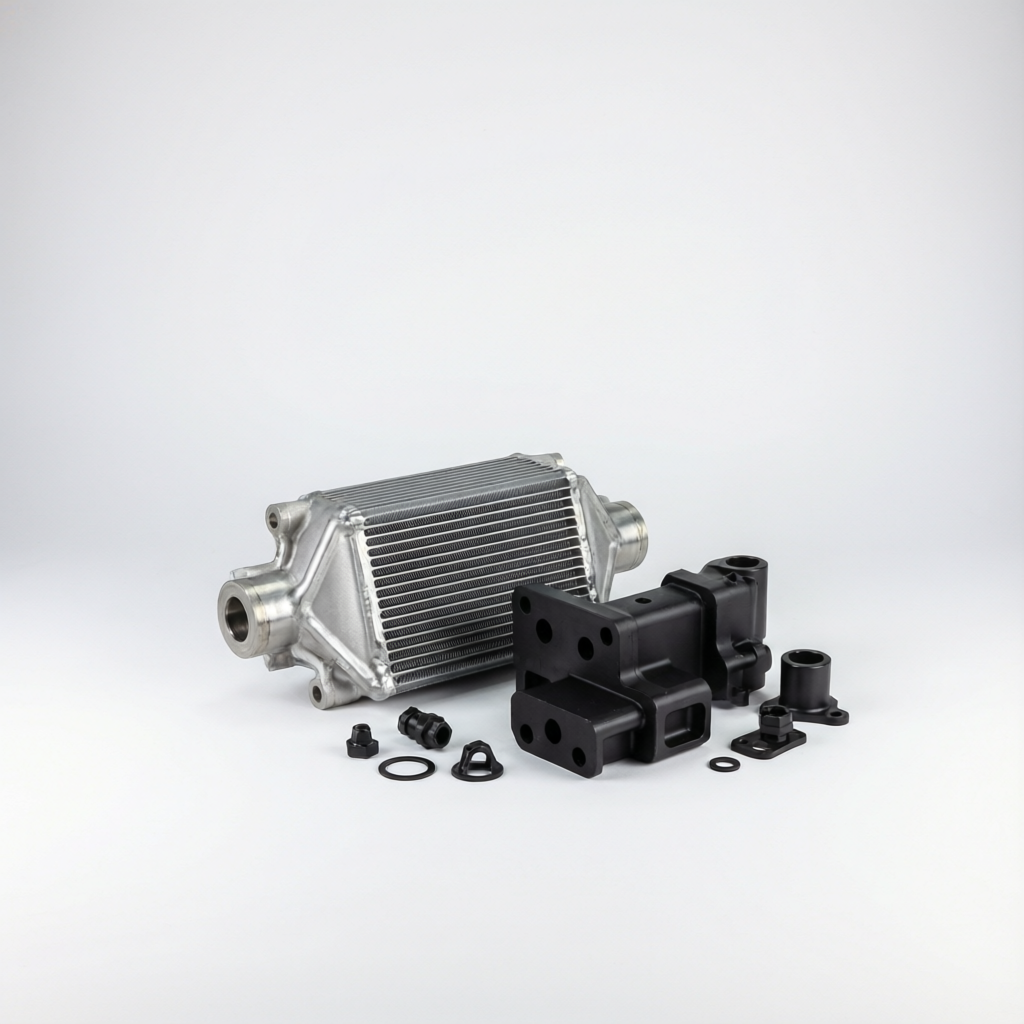
When you delete the EGR system on an LMM, the factory passenger-side up-pipe — the formed steel tube that routes exhaust from the exhaust manifold to the EGR cooler — has to come out. Deleting the cooler without replacing this pipe leaves an open exhaust port at the manifold. Plugging it is an option, but a better one is replacing it: the IFJF Passenger Side Up-Pipe for the 2007.5–2010 LMM is a direct replacement that eliminates the EGR feed entirely and improves exhaust flow on that bank.

What this pipe does differently:
-
EGR port eliminated. The factory up-pipe has a branch that feeds exhaust to the EGR cooler. The IFJF replacement deletes that branch — the exhaust path from the passenger-side manifold goes directly to the turbo, with no split, no restriction, and no soot-sending side route to the intake.
-
High-performance bellows section. The factory up-pipe uses a rigid formed tube. The IFJF replacement includes a flexible stainless steel bellows section that absorbs thermal expansion and vibration without cracking.
-
Fast airflow path. With the EGR branch removed, exhaust from cylinders 2, 4, 6, and 8 (passenger side) flows directly into the turbocharger inlet with fewer turns and less restriction. The result is faster spool, lower drive pressure on that bank.
-
Heavy-Duty stainless steel construction. The flange and pipe body are built from materials that match the thermal expansion rate of the cast iron exhaust manifold, reducing the risk of gasket blowout at the manifold flange under repeated heat cycling.
Why pair it with the delete kit: The EGR delete kit blocks off the intake and coolant sides of the system. The up-pipe handles the exhaust side. Together, they eliminate every component of the LMM EGR circuit — nothing left on the engine to clog, crack, or leak. Doing the delete without the up-pipe replacement means capping the factory pipe’s EGR branch at the manifold, which works but leaves the inefficient multi-branch pipe in place.
Conclusion
The LMM’s wet soot problem isn’t a maintenance issue — it’s a design issue. The combination of DPF backpressure, open PCV ventilation, and an EGR system operating at high flow rates guarantees that carbon-and-oil sludge will accumulate in the intake from the first mile to the last. Cleaning buys you time. Deleting the system buys you an engine that breathes clean air for the rest of its service life.
IFJF carries both pieces of the puzzle for the 2007.5–2010 LMM. Pair both with a proper ECM tune, and the LMM’s dirtiest design flaw is no longer your problem.
Frequently Asked Questions
Q1: Does an LMM EGR delete require ECM tuning at the same time?
A1: Yes. The LMM ECM monitors EGR valve position via a feedback sensor and measures EGR flow through a differential pressure sensor across the EGR circuit. When the hardware is physically removed, the ECM sees zero commanded flow and zero feedback — which triggers fault codes, illuminates the check engine light, and begins a progressive derate that limits engine power.
Q2: How long does a full LMM EGR delete take to install?
A2: Plan for 6–8 hours at a shop with Duramax experience, or a full weekend for a competent DIY owner with good mechanical skills. The LMM EGR cooler is mounted at the front of the engine and is accessed from above after removing the intake plumbing and some surrounding bracketry.
Q3: Will an EGR delete improve fuel economy on the LMM?
A3: Yes. A 1–2 MPG improvement is realistic with proper tuning. Removing EGR fills the cylinders with cool, dense air, so the ECM can pull fuel while making the same power. Combined with the reduced pumping losses from a clean intake and a moderate tune that optimizes timing for the new air-fuel conditions, the fuel savings are visible on the first tank.
Q4: Will I pass emissions testing with an EGR delete?
A4: No. Removing factory EGR equipment makes the truck non-compliant with EPA emissions regulations for on-highway vehicles. EGR delete kits are intended exclusively for off-road, racing, and competition applications. Know your local testing requirements and enforcement environment.
Q5: Can I just clean the EGR valve and intake instead of deleting the system?
A5: You can — and it will buy you time. But cleaning removes the symptom, not the cause. The EGR system will continue routing carbon into the intake, the PCV system will continue feeding oil vapor into the same air stream, and the wet soot will begin accumulating again the day you put the truck back on the road.