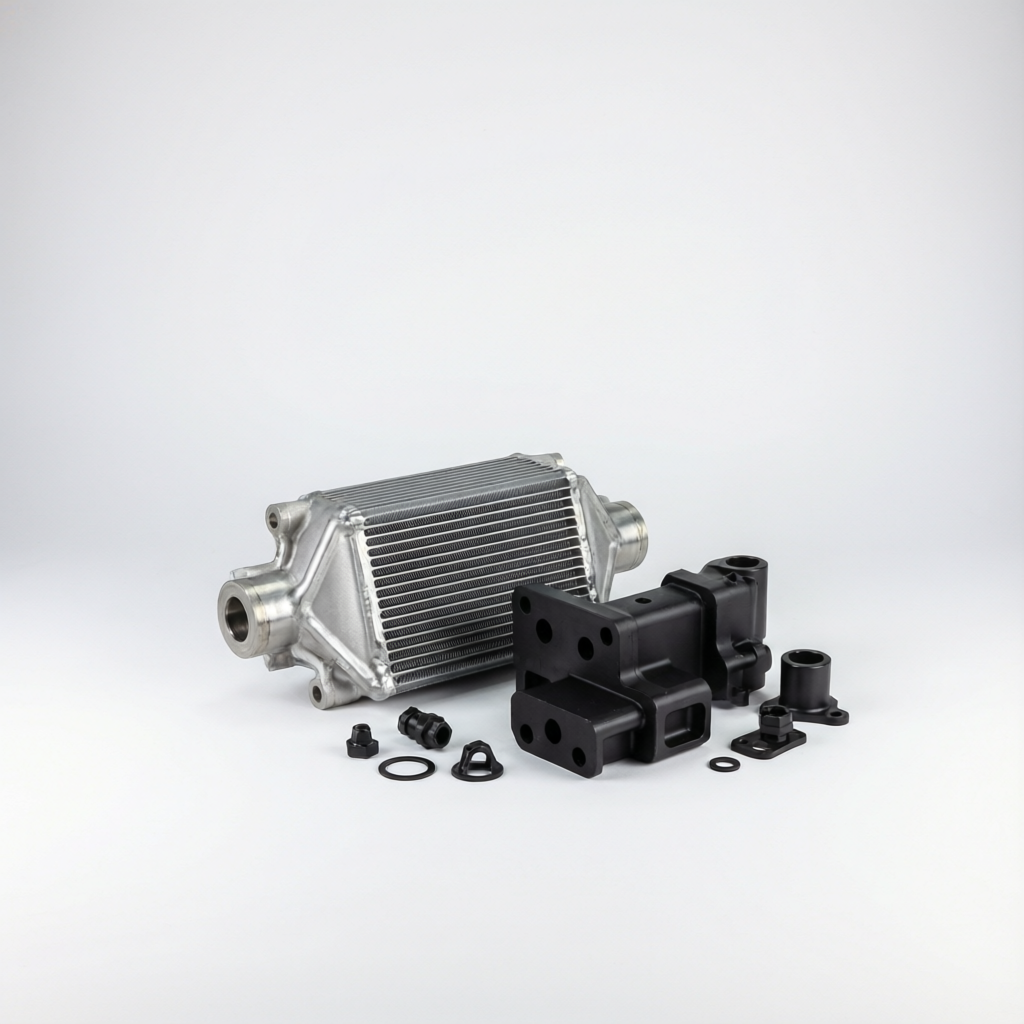

If you’ve spent any time in Duramax forums, you’ve seen the claims: “Deleted my LLY EGR, gained 30 horsepower.” “EGTs dropped 150 degrees.” “Fuel mileage went up 3 MPG.” Most of it is wrong — or at least, it’s the tune and exhaust doing the heavy lifting, not the delete itself.
That’s the whole point of this article. The word “actually” is in the title for a reason. We’re going to strip away the forum hype and the parts-page marketing, and lay out exactly what changes when you remove the EGR from a 2004.5–2005 6.6L LLY Duramax — the real, measurable effects on turbo response, EGTs, and fuel mileage — plus the honest list of what doesn’t change and what a delete won’t fix.
If you’re on the fence about whether an LLY EGR delete is worth it, this is the straight answer you’ve been looking for.
First, Clear Up the Biggest Confusion: The LLY Is an EGR Platform, Not a DPF Platform
Before we talk about what changes, we have to fix a misunderstanding that trips up a huge number of LLY owners — and sends them down the wrong parts-buying path.
The 2004.5–2005 LLY Duramax does not have a DPF. It doesn’t have DEF, and it doesn’t have an SCR system either. Those came later:
| Generation | Years | Emissions Hardware | What Owners Fight |
|---|---|---|---|
| LB7 | 2001–2004 | None (pre-EGR) | Injectors, fuel system |
| LLY | 2004.5–2005 | EGR only | EGR carbon, overheating, turbo inlet |
| LBZ | 2006–2007 | EGR only | Stronger electronics, higher fuel capacity |
| LMM | 2007.5–2010 | EGR + DPF | Regen cycles, aftertreatment |
| LML+ | 2011+ | EGR + DPF + DEF/SCR | Full emissions stack |
The LLY was the first Duramax to carry a water-cooled EGR system — GM’s opening move to meet EPA Tier 2 standards under 40 CFR Part 86. It’s a “first-generation aftertreatment” engine: the factory bolted a cooled EGR cooler onto it, but nothing else yet.
So when you hear “LLY DPF delete,” that’s a generation mix-up. The LLY conversation is EGR, intake heat, cooling load, and turbo inlet restriction — not regen cycles or DEF. Nail this down before you order anything.
How to confirm yours is a true LLY:
The engine code is the VIN’s 8th digit — “2” means LLY (2004.5–2005). These trucks appear as Chevy Silverado 2500HD/3500HD and GMC Sierra 2500HD/3500HD, plus the medium-duty Kodiak/TopKick C4500/C5500.
What the LLY EGR System Actually Does — and Why It’s a Time Bomb
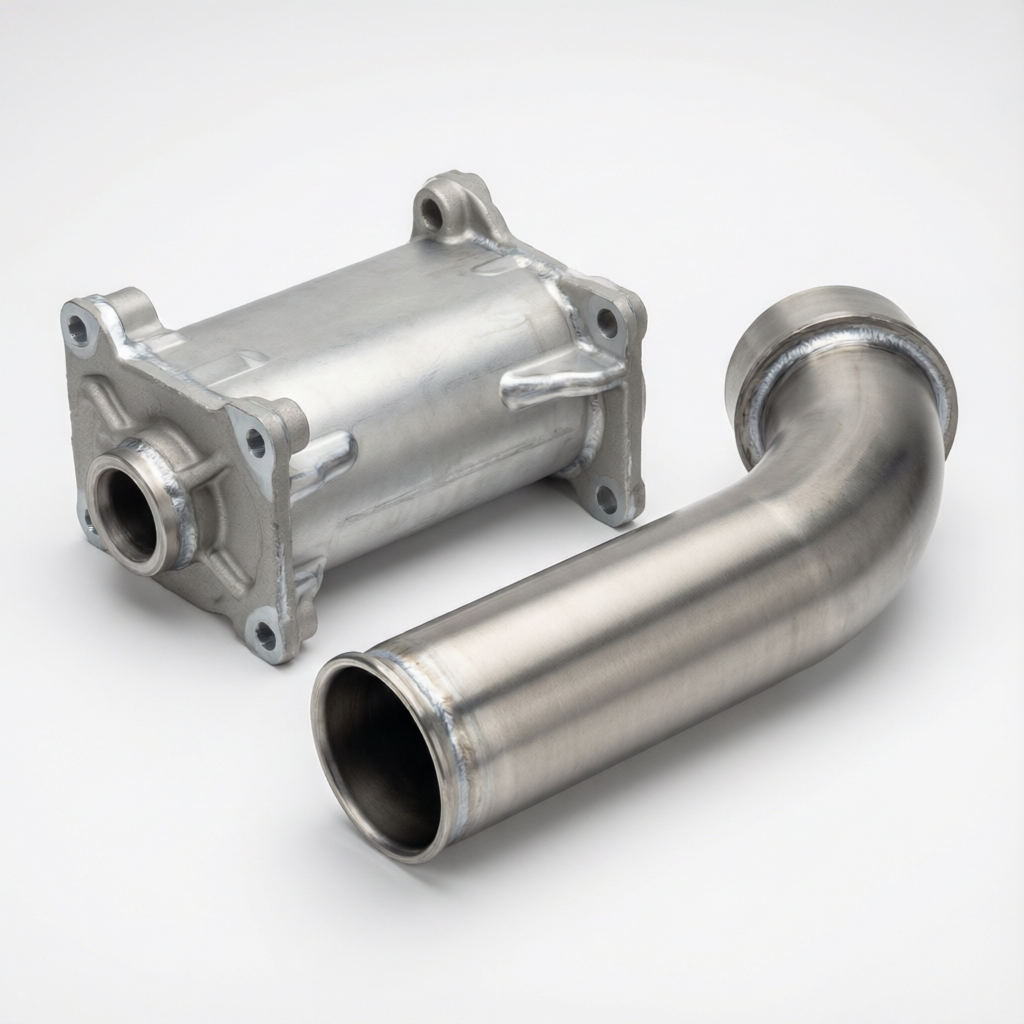
The EGR (Exhaust Gas Recirculation) system pulls hot exhaust gas out of the exhaust stream, runs it through a liquid-cooled heat exchanger (the EGR cooler), then dumps it back into the intake to lower peak combustion temperature and cut NOx output.
The problem is what that recirculated gas carries with it: soot and partially-burned hydrocarbons. Here’s the LLY-specific failure chain that plays out above roughly 100,000 miles:
-
The cooler core cracks. The LLY uses a stacked-plate EGR cooler that fatigues under repeated heat cycling. Once it cracks, coolant leaks into the intake stream — and coolant in a diesel combustion chamber is never a good day (white smoke, hydrolock risk, head gasket strain).
-
The valve gums up. Carbon clogs the EGR valve so it sticks open or closed, throwing P0401/P0402-class codes and causing rough idle and lazy throttle.
-
The intake turns into a chimney. Owners who pull an LLY intake at 150,000+ miles routinely find an inch or more of hardened carbon choking the intake runners and ports.
Real-world proof from a 245,000-mile LLY teardown: the owner scraped out a quarter to a third of an inch of solid soot from the EGR pipe and charge pipe — material that “would break off the walls and get sucked right into the engine.” That’s the slow, progressive degradation a delete stops.
The Three Dimensions: What Actually Changes
Here’s the honest, source-backed breakdown. One of these changes is real and immediate; the other two are conditional and often oversold.
1. Turbo Response — ✅ The One Real, Immediate Change
This is the one thing every credible source agrees on, and it’s backed by solid physics.
The LLY came with a large Garrett VGT turbo — the biggest factory turbo of the early Duramax generations, with headroom to support far more than the factory ~300 hp (compared to the LBZ’s 365 hp). The turbo itself has plenty of capacity. What holds it back is the restriction in front of it and the hot gas being dumped back into it.
Here’s what happens when you delete the EGR:
- No more hot exhaust gas in the charge air. Cleaner, denser, cooler air reaches the cylinders.
- Less backpressure on the intake side. The EGR path is gone, so the intake tract flows more freely.
- The result: the turbo spools faster. Owners consistently report “it definitely spools faster” — and the torque curve comes on earlier and harder.
This isn’t a horsepower gain in the dyno sense. It’s a driveability and response improvement — the truck feels more eager off the line and under load, especially on a high-mileage engine that was already choking on carbon.
2. EGTs — ⚠️ Indirect, and Only Significant When Paired with a Tune
Here’s where the hype machine kicks in. Some blogs claim 150°F EGT drops. The honest number, per the sources that actually measure, is more modest:
- Intake air temps (IAT) drop 15–30°F under load — that part is real, because you’ve removed a source of hot gas.
- Peak EGTs drop 50–100°F — but only when paired with a tune. The delete alone reduces the thermal load on the cooling system (the EGR cooler is no longer dumping heat into your coolant). The meaningful EGT reduction at wide-open throttle comes from the re-calibration and freer exhaust, not from the block-off plate by itself.
The way to think about it:
The EGR delete is a thermal-management upgrade, not an EGT cheat code. On an LLY — which is already notorious for running hot while towing — removing the cooler’s heat load from the cooling system is genuinely valuable. But don’t expect the delete alone to let you tow a heavier trailer up a steeper grade without touching the rest of the airflow and cooling stack.
3. MPG — ⚠️ Modest at Best, and Nobody Can Prove It
This is the one you should treat with the most skepticism.
The honest truth: there is no reliable, measured fuel-economy gain from an LLY EGR delete alone. When owners on forums ask “did it help your fuel mileage?”, the people who actually did the delete either don’t answer with a number or report “maybe 1–2 MPG.” The sources that quote a hard number are usually the ones also selling you a tuner.
What you might get:
- 1–2 MPG improvement in ideal highway conditions, from slightly more complete combustion and reduced pumping losses.
- Better fuel mileage consistency on a truck that was previously surging or running rich due to a clogged EGR valve.
What you should not expect: a 3+ MPG jump from a delete alone. If someone promises that, they’re either lumping in a tune, or they’re selling something. The single biggest driver of real MPG gains on an LLY is the re-calibration — and even then, the moment you start using the extra power, any efficiency gain evaporates.
How to Know Your LLY EGR Is Failing (Before It Costs You an Engine)
LLY EGR failures are rarely sudden. They creep up — a cooler core slowly cracking, a valve gradually gumming up, an intake quietly filling with carbon. But there are a handful of specific signs that tell you the system is going before it takes something expensive with it.
Coolant Is Disappearing, But There’s No Puddle Under the Truck
This is the earliest and most dangerous signal. When the EGR cooler core cracks internally, coolant leaks into the intake stream, where it gets burned off or blown out the exhaust — never leaving a puddle on the ground. Check the coolant reservoir level every week or two. An unexplained drop, with no visible leak, points straight at the EGR cooler.
White Smoke on Cold Start or Under Hard Throttle
Coolant in the combustion chamber produces white smoke with a distinctly sweet, almost syrupy smell — different from the gray-white haze of unburned diesel. A brief white puff on a cold start, or a noticeable plume when you roll hard into the throttle, is coolant getting into the cylinders.
Oil Film or a Foul Smell in the Coolant Reservoir
The leak can go both ways. Exhaust gas can push back into the coolant, leaving an oily film floating in the reservoir, a darker tint, or a burnt/sweet odor. If the coolant looks dirty or oily, the cooler’s internal seals are compromised.
Rough Idle and a Lazy Throttle
As carbon builds up on the EGR valve, it starts sticking open or closed. The result is an idle that hunts or stumbles, and a throttle that feels soft and unresponsive off the line — often accompanied by a P0401 (insufficient EGR flow) or P0402 (excessive EGR flow) code.
Power and Response That Quietly Slip Away
Carbon doesn’t just gum the valve — it narrows the intake runners and ports themselves. A high-mileage LLY can lose noticeable response as the intake fills with hardened soot, and it’s easy to write off as “the truck’s just getting old.” It’s usually the intake choking, not the engine.
A Sweet Smell in the Engine Bay
Glycol coolant has a distinctive sweet odor. If you catch it after a hot shutdown, coolant is seeping somewhere and evaporating off a hot surface — often the EGR cooler area.
The combination that should stop you in your tracks: disappearing coolant plus white smoke. Those two together mean the cooler has already cracked and coolant is entering the cylinders — the setup for hydrolock or a blown head gasket. If you see both, don’t keep driving it on the hope it’ll clear up.
The Three Levels of an LLY EGR Delete — and Where Each Product Fits
Not all deletes are equal. There’s a clear ladder, and knowing where you sit on it determines what actually changes for your truck:
| Level | What You Do | What It Changes | Best For |
|---|---|---|---|
| 1. Block-off plate | Plug the EGR port, leave all hardware in place | Least. Stops the recirculation, but the cooler still sits there dumping heat into your coolant, and the restrictive intake bridge stays. | Budget, reversible, low-effort |
| 2. Standard delete | Remove cooler + valve, cap the up-pipe, reroute coolant | Stops recirculation and removes the cooler’s heat load from the cooling system. Intake path unchanged. | Reliability-focused daily drivers and tow rigs |
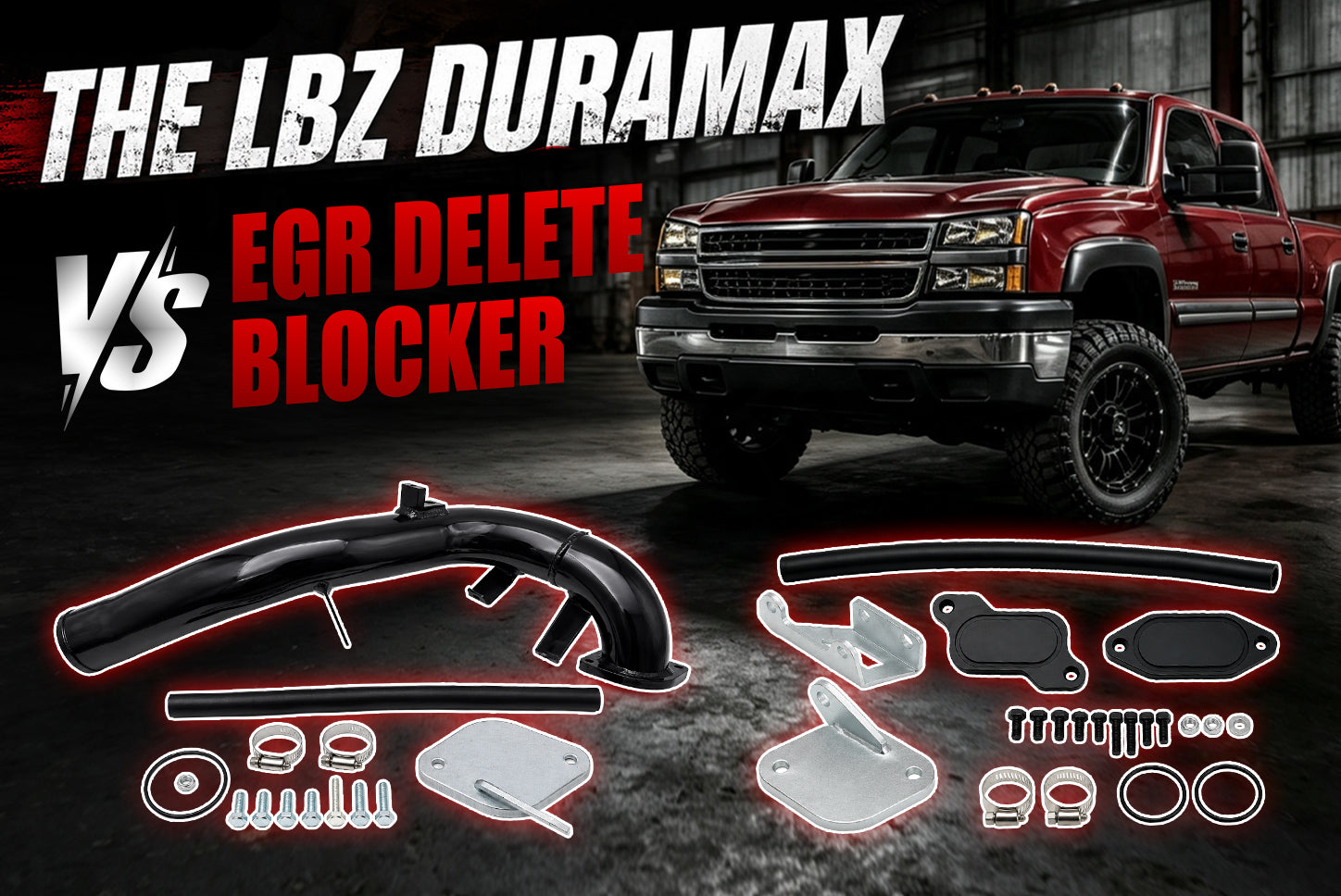
| 3. High-flow elbow delete | All of the above, plus replace the restrictive factory intake bridge with a free-flowing elbow | Everything in level 2, plus a meaningful airflow gain into the turbo — the biggest throttle-response and spool improvement. | Heavy towers, aggressive tunes, max response |
Here’s the key insight for the “actually” question: a lot of the throttle-response and “woke the truck up” benefit people attribute to the EGR delete is actually coming from level 3 — replacing that cramped factory intake bridge. The LLY’s factory turbo inlet mouthpiece is notoriously restrictive, and it’s a separate bottleneck from the EGR itself.
This matters because the two IFJF kits below sit at levels 2 and 3 — and choosing the right one is the difference between “just fixed my reliability problem” and “actually woke the truck up.”
IFJF Standard Kit (Level 2) — The Reliability Fix
For the 2004.5–2005 LLY owner whose priority is stopping the cooler from cracking and the intake from coking, the standard kit is the clean answer:

- CNC billet aluminum block-off plates for an airtight, leak-free seal.
- High-temp silicone coolant hose for the reroute.
- Deletes the EGR valve and cooler entirely — eliminating the coolant-leak and carbon-buildup failure modes.
This is the “fix the problem without over-building” option. It keeps your stock airflow, but it removes the two things that actually kill LLY engines over time: the cracked cooler and the coked intake.
EGR Delete Kit (Valve & Cooler) for 2004.5–2005 LLY Duramax — CNC billet block-off plates + silicone coolant hose. Deletes the factory valve and cooler for a clean, soot-free intake and zero coolant-leak risk.
IFJF High-Flow Elbow Kit (Level 3) — The Response Upgrade
If you tow heavy, run a tune, or simply want the truck to feel dramatically more responsive, the high-flow elbow kit is where the real “woke it up” difference lives:

- Everything in the standard kit, plus a smooth, mandrel-formed high-flow intake elbow that replaces the cramped factory neck-down.
- CNC billet aluminum plates + stainless hardware + high-temp silicone hoses.
- The elbow removes the single biggest intake restriction in front of the LLY’s turbo.
This is the kit that genuinely maximizes turbo spool-up and throttle response — because it attacks both bottlenecks (the EGR and the intake bridge) at once. If you’re chasing the “spools faster” outcome, this is the one.
EGR Delete Kit with High-Flow Intake Elbow for 2004.5–2005 LLY Duramax — full valve/cooler delete plus a mandrel-bent high-flow elbow that replaces the restrictive factory bridge. Maximum throttle response and spool-up.
The Feature Comparison
| Feature Comparison | Level 2: IFJF Standard Kit | Level 3: IFJF High-Flow Elbow Kit |
| Primary Goal | Fix EGR leaks and carbon buildup issues | Increase intake airflow and boost turbo response |
| Completely Removes EGR Cooler & Valve | ✅ Yes | ✅ Yes |
| Includes Leak-Proof Coolant Hoses & Block-Off Plates | ✅ Yes | ✅ Yes |
| Replaces Restrictive Factory Y-Bridge | ❌ No (Retains stock unit) | ✅ Yes (Replaces with high-flow elbow) |
| Best For | Daily drivers & tow rigs seeking stock-like reliability | Tuned trucks & heavy towing wanting sharper throttle response |
What a Delete Won’t Fix — The Part Most Articles Skip
This is the honesty section, and it’s the most important one if you’re trying to avoid throwing money at the wrong problem. An LLY EGR delete is not a cure-all. Here’s what it won’t do:
-
It won’t fix LLY overheating. The LLY’s cooling issues are primarily driven by severe underhood heat, a restrictive factory turbo inlet mouthpiece, and airflow restrictions in the cooling stack — not just the radiator size. The EGR delete helps by removing the cooler’s heat load, but it’s not the cure.
-
It won’t fix the “Ice Pick Fix” injector-harness issue. The LLY’s chafed injector wiring and #2/#7 cylinder pigtail problems are electrical, not emissions. If your truck is going into “tractor mode” (limp), you’ve got a wiring or FICM issue, not an EGR problem.
-
It won’t fix boost leaks or a weak fan clutch. A cracked charge-air boot or a lazy fan still needs addressing on its own.
-
It won’t add horsepower by itself. This bears repeating: the delete is a reliability and thermal-management upgrade. The 60–100 hp numbers you see quoted come from pairing it with a tune and a freer exhaust — not from the block-off plate.
The honest way to think about it: an EGR delete removes a known reliability weak point and a source of intake restriction. It does not repair the rest of the truck.
Install Reality Check: What the Videos Don’t Always Show You
The Non-Negotiable Rule:
Tune first, then remove hardware. The LLY’s ECM will detect the missing EGR flow and missing sensors, throw codes, and potentially run poorly without a supporting tune. A custom tuner (EFI Live or HP Tuners class) is required to disable the EGR diagnostics. Skipping this is the #1 cause of post-delete CELs and limp mode.
The Hidden Difficulty:
The EGR cooler is buried under the intake Y-bridge. Unlike later Duramax generations where the EGR is more accessible, on the LLY the cooler sits directly beneath the intake Y-bridge. The Y-bridge has to come off to reach it. That’s real teardown work.
The Up-Pipe Bolts Are The Part That Breaks
The up-pipe (and the turbo-side bolts) are heat-cycled, and on a salt-belt truck they’re rusted. Owners repeatedly report breaking these bolts even with heat — and a broken bolt means pulling and drilling the manifold. Budget extra time and have extraction tools ready if your truck has seen winter salt.
Coolant Reroute Is Not Optional
The coolant lines that fed the EGR cooler must be properly looped. Capping them or routing them wrong creates air pockets and can cause overheating — the exact thing you’re trying to avoid.
Budget 3–5 hours for a clean truck, more for a rusty one. First-timers should plan 6–8 hours and keep a service manual handy.
The Legal Reality (Read This Before You Order)
We’d be doing you a disservice if we didn’t say it plainly:
-
Removing or disabling emissions equipment on a vehicle driven on public roads is a federal violation under the Clean Air Act (42 U.S.C. § 7522) and EPA tampering rules (40 CFR § 86.1845).
-
Individual penalties can reach $5,911 per violation; manufacturer/dealer penalties run far higher.
-
“Off-road only” or “competition use” wording on a listing does not create a legal exemption for a truck that’s registered and driven on public roads.
-
State rules (like California’s CARB) add inspection and EO-approval requirements, and deleting will void your emissions warranty and hurt resale in inspection states.
These kits are for off-road, race, competition, or non-public-road use where legally allowed. If your truck is a daily driver, a tow rig, or anything that touches public roads, the legal path is to repair the factory system — not delete it. Know your local laws before you turn a wrench.
Conclusion
The LLY Duramax’s EGR system is a slow-motion reliability problem: a cracking cooler that leaks coolant into your engine, and a coked-up intake that chokes airflow. Deleting it does change things — but the honest version is this:
- Turbo response improves — for real. That’s the one change you can count on.
- EGTs improve — indirectly and conditionally, mostly by lightening the load on your cooling system and getting meaningfully better when paired with a tune.
- MPG barely moves — and nobody can prove it. Don’t buy a delete for fuel savings.
And the delete doesn’t fix overheating, injector-harness gremlins, or boost leaks, and it doesn’t add horsepower on its own.
If you want the reliability fix and to stop the cooler from taking out your head gasket, the standard EGR delete kit is the clean answer. If you want the truck to genuinely wake up — faster spool, sharper throttle — step up to the high-flow elbow EGR delete kit, because that restrictive factory intake bridge is a bottleneck the basic block-off leaves in place.
Both are engineered for the exact 2004.5–2005 LLY platform, CNC-machined, and in stock at IFJF — where you’ll find delete kits and diesel upgrades for Duramax, Powerstroke, and Cummins platforms, all built for the kind of real-world towing and hauling these trucks actually do.
Frequently Asked Questions
Q1: Does an LLY EGR delete add horsepower?
A1: No — not by itself. The delete is a reliability and thermal-management upgrade. The 60–100 hp numbers you see quoted come from pairing it with a tune and a freer exhaust.
Q2: What’s the real turbo-response change after an LLY EGR delete?
A2: The turbo spools faster because you’ve removed hot exhaust gas from the charge air and cut intake-side backpressure. It’s a genuine driveability improvement, not a dyno number.
Q3: Does an LLY have a DPF?
A3: No. The 2004.5–2005 LLY is a pre-DPF, pre-DEF platform. It carries only EGR. DPF-related delete topics apply to LMM (2007.5+) and later generations.
Q4: Will an EGR delete fix LLY overheating?
A4: Not by itself. LLY overheating is mainly a radiator, cooling-stack, and turbo-inlet-mouthpiece problem. The delete helps by removing the cooler’s heat load, but you still need to clean the stack and address airflow.
Q5: Do I need a tune with an LLY EGR delete?
A5: Yes. The ECM will detect missing EGR flow and sensors and throw codes without a supporting tune. Tune first, then remove hardware.
Q6: Which kit should I choose — standard or high-flow elbow?
A6: Standard if you want the reliability fix and are keeping stock airflow. High-flow elbow if you tow heavy or want maximum throttle response and spool-up, since it also replaces the restrictive factory intake bridge.
Q7: Is an LLY EGR delete legal for street use?
A7: No. Removing emissions equipment on a public-road vehicle violates the Clean Air Act. These kits are for off-road, race, or competition use where legally allowed.
Q8: What won’t an LLY EGR delete fix?
A8: It won’t fix overheating, the injector-harness “Ice Pick Fix” issue, boost leaks, or a weak fan clutch — and it won’t add horsepower on its own.