
The 2006–2007 6.6L Duramax LBZ is the engine a lot of diesel guys call the best GM ever built. It’s the last of the pre-emissions Duramaxes — no DPF, no DEF, just a single EGR system bolted on top of one of the strongest bottom ends in the segment. It’s tuner-friendly, famously reliable, and it’s the reason clean, low-mileage LBZ trucks still command real money today.
But there’s a quiet problem —— EGR system recirculates soot-laden exhaust back into the intake, and over time that soot builds up, raises exhaust gas temperatures, and — in the worst cases — destroys the engine from the inside.
When LBZ owners finally decide to do something about it, they hit the classic Duramax dilemma: spend $20 on a blocker plate, or invest in a full EGR delete? The cheap answer is tempting. It’s also, as you’re about to see, a half-measure that can create problems the factory never had.
Why the LBZ Is So Loved — And Why the EGR Is Its One Soft Spot
Before we talk about deleting anything, it’s worth understanding why the LBZ has the reputation it does, because it explains both the appeal and the risk.
The LBZ launched in 2006 and only ran through midway through 2007 — the shortest production run of any Duramax. It was built on the updated 2006 LLY platform, and GM did real work on it: a thicker block, stronger rods, and a larger turbo inlet. Those changes fixed a lot of the overheating and head-gasket problems that plagued the earlier LLYs.
The Last Pre-emissions Duramax
It has exhaust gas recirculation — that’s it. No diesel particulate filter, no DEF/SCR stack, no ninth injector, none of the modern emissions hardware that makes later trucks a maintenance minefield. That’s a huge part of why it’s so desirable: it’s simple, it’s tunable, and there’s less to go wrong.
That’s also why the EGR stands out so much. It’s the only emissions system on the engine, which means it’s the one thing standing between a stock LBZ and a genuinely bulletproof truck.
The Piston —— Weak Link
The factory rating is 360 horsepower and 650 lb-ft of torque, and the engine responds extremely well to tuning. But here’s the honest caveat that the “LBZ is perfect” crowd doesn’t always mention: the pistons are the weak link. They can handle roughly 600 rear-wheel horsepower, and pushing past that — or, in some documented cases, even at stock power due to a suspected manufacturing defect — can crack them.
For now, the key takeaway: the LBZ is a great engine, and the EGR is the one factory system that works against it over time.
How the EGR Silently Ruins an LBZ
The EGR system’s job is simple: route a portion of hot, sooty exhaust gas back into the intake to lower combustion temperatures and cut nitrogen oxide emissions. The design is sound. The long-term effects on a diesel are not.
Here’s what actually happens over tens of thousands of miles:
-
Soot builds up in the intake. Every bit of exhaust that gets recirculated carries soot with it. That soot coats the intake manifold, the intake ports, and the turbo. On high-mileage LBZs, it’s not unusual to find a thick, hard layer of carbon choking the airflow.
-
The EGR valve sticks. The valve itself lives in the middle of that soot stream. Over time it loads up with carbon and either sticks closed (killing airflow) or sticks open (dumping exhaust into the intake constantly).
-
EGTs climb. Restricted intake flow and the constant reintroduction of hot gas push exhaust gas temperatures up, especially under load. Sustained high EGTs are a slow death sentence for turbos and engine internals.
-
The EGR cooler cracks. The cooler uses engine coolant to bring recirculated exhaust down to a tolerable temperature. Those internal tubes crack under thermal cycling, and when they do, coolant can enter the intake.
The cumulative effect is what the “delete” crowd is really responding to: an engine that’s slowly choking itself. It’s not that the LBZ is weak — it’s that the EGR is actively making it less reliable, one soot layer at a time.
The Two Choices: Blocker Plate or Full Delete
When you decide to address the EGR, you have two fundamentally different paths. They sound similar, and that’s exactly what trips people up.
Option A: The EGR blocker plate — “the band-aid”
A blocker plate is a thin piece of metal that slips between the up-pipe and the EGR cooler, physically stopping exhaust gas from entering the intake. You leave the EGR cooler, the valve, and all the factory plumbing in place. You bolt the plate in, tighten everything back down, and walk away.
The appeal is obvious: it’s cheap. We’re talking a $20–$80 part versus a full kit.
Option B: The full EGR delete — “the actual fix”
A full delete physically removes the EGR valve, the cooler, and the associated plumbing. It replaces the restricted factory airflow path with a high-flow intake tube, and — this is the crucial part — it swaps in a replacement up-pipe that eliminates the EGR riser entirely.
The full delete is more expensive and more work. But it’s also the difference between stopping the soot and removing the problem completely.
Why the Blocker Plate Is a Half-Measure (And Can Blow Up Your Up-Pipe)
When you block the EGR, you stop the exhaust from reaching the intake — but you don’t give that exhaust anywhere else to go. The factory up-pipe still in place, that pressure gets trapped against the blocked opening. And the factory up-pipe has a flexible metal bellow designed to absorb heat expansion — not sustained backpressure.
Real owners have documented exactly what happens next:
The Up-pipe Bellow Blows Out
Forum veteran warned about this years ago, and it’s been confirmed over and over since: “You risk blowing out an up-pipe bellow with the blocker plate installed.” The trapped pressure fatigues the metal bellow, it cracks, and eventually it blows out violently — leaving you with a massive exhaust leak and a tow bill.
The Boost Leak Shows Up ~20k Miles Later
Truck owner ran a blocker plate trouble-free for about 20,000 miles, then developed a boost leak from the EGR area. He ended up replacing it with a full delete tube and up-pipes. His experience is a textbook illustration of the “cheap now, expensive later” trap — the plate didn’t fail immediately, it just deferred the problem.
The Blocked Cooler Turns Into A Corrosive Sludge Factory
This one is less talked about but just as real. When the cooler is blocked but left in place, the trapped soot and condensation mix inside it into an acidic sludge. Exhaust gaskets are designed to seal gas, not liquid — so that sludge eventually seeps out and drips, looking for all the world like an oil leak.
None of this is to say a blocker plate always fails immediately. There are owners who’ve run them for 100,000+ miles without a catastrophic event. But that’s the definition of gambling. You’re betting that the backpressure won’t find the weakest point in your truck. And when it does, the repair cost dwarfs the money you saved.
Why the Full Delete Is the Real Repair
The full delete solves the problem the blocker plate only postpones, and it does it by removing the source of the backpressure.
When you delete properly, you’re not just plugging the EGR — you’re replacing the entire restricted flow path:
-
A replacement up-pipe eliminates the EGR riser. This is the single most important piece of a true delete. With the riser gone, exhaust flows straight through to the turbo with no dead-end to pressurize. No trapped backpressure means no blown bellow.
-
A high-flow intake tube or Y-bridge opens up the airflow path that the factory EGR plumbing was choking. This is where the “breathe better” feeling comes from — the turbo spools faster, and the engine isn’t fighting its own plumbing.
-
The cooler and valve come out entirely, which removes the soot source, the coolant-leak risk, and the future maintenance item all at once.
The result is what owners who’ve done it report consistently: faster turbo spool, less black smoke, and a noticeable improvement in the seat.
There’s also a practical upside nobody talks about enough:
The engine bay gets cleaner and more accessible. Removing the bulky cooler and its plumbing makes future work (injectors, turbo, general maintenance) significantly easier. That’s a real, lasting benefit even if you never chase a single horsepower.
Real Numbers — How Much Power and Mileage Does a Delete Actually Add?
Let’s set expectations honestly, because this is where a lot of the hype lives.
Power Increase:
An EGR delete, by itself, does not add meaningful horsepower. The gains people feel after a delete come from two things:
- The restored airflow (which feels like sharper throttle response)
- Far more importantly — the tune that has to accompany it
A full delete paired with a proper tune typically lands in the 15–30 horsepower range on an LBZ, depending on the tune level and supporting mods. The tune is doing most of the heavy lifting; the delete is what allows the engine to breathe cleanly and run cooler so the tune can do its job safely.
On Fuel Economy:
You may see a 1–3 MPG improvement, mostly from the cleaner intake flow and the engine not working as hard to breathe. It’s real, but it’s not dramatic. And here’s the honest counterpoint worth sitting with: if fuel economy is your only goal, a delete is a poor investment.
Some owners argue — correctly — that the EGR actually helps a heavy cast-iron diesel warm up faster in cold climates, and that if you’re not chasing power, running a quality fuel additive to keep the intake clean is cheaper and simpler than deleting. That’s a legitimate position for a stock, street-driven truck that has to pass inspection.
The Tune You Cannot Skip
This is non-negotiable, and it’s the most common mistake first-time deleters make. Whether you install a $20 blocker plate or a full delete kit, you must reflash the ECM to turn the EGR function off.
The factory ECU monitors the EGR valve’s position and the flow through it. Remove or block the hardware without tuning, and the ECU throws codes — most commonly P0401 (insufficient EGR flow) — and turns on the check engine light. In some cases it’ll even derate the engine.
A proper EGR-delete tune does three things:
- Disables the EGR diagnostic codes so the light stays off.
- Stops commanding the EGR valve, which prevents the ECU from making fueling and timing decisions based on a system that no longer exists.
- Optimizes fueling and timing for the now-open intake path, which is where the throttle-response and mild power gains actually come from.
The sequence matters too: flash the tune before you finish the hardware work, so the ECU is already calibrated for the deleted state when you fire it back up. Trying to run a deleted truck on the stock calibration is how you end up with a lit dash and a truck that won’t run right.
Plan for the tuner as a separate line item in your budget. It’s not optional — it’s part of the job.
Installation — What Actually Makes This Job Hard
The LBZ EGR delete is a solidly moderate to difficult DIY job — most guides rate it about 7 out of 10. A mechanically experienced owner can do it in 2–4 hours; a diesel shop in about 1.5 hours. The difficulty isn’t the concept — it’s the access, especially around the up-pipe against the firewall.
One step matters more than all the others:
The pre-soak. The up-pipe bolts live in a hot, corrosive spot against the firewall and seize badly. Soak every bolt you’ll touch — up-pipe, cooler, and downpipe — in penetrating oil at least 24 hours before you start.
You Need Tools:
- A 12mm 12-point socket (the up-pipe bolts)
- An 11mm (downpipe) and 14mm (manifold)
- A breaker bar
- A swivel socket
- A stubby 12mm wrench for the cooler’s rear bolts
- A drain pan
- Fresh Dex-Cool coolant
- Gasket maker
- Copper anti-seize
The Full Sequence:
-
Disconnect the negative terminal on both batteries.
-
Drain enough coolant to work around the cooler without spilling.
-
Remove the intake resonator and elbow to open up the top of the engine.
-
Unplug the electrical connectors — the gray EGR valve connector, the grid heater lead, the MAF, and the blow-by tube. Zip-tie the now-dead leads out of the way.
-
Remove the EGR valve and cooler as a unit. Two bolts up front, two at the back — the rear two are the worst, reachable with a stubby wrench and a lot of patience. A coolant hose and an A/C bracket may need to move first.
-
Remove the downpipe and turbo heat shield (full delete only) to reach the turbo pedestal. Downpipe bolts are 11mm; loosen the transmission dipstick to wiggle it past.
-
Remove the factory up-pipe — the hard part. The bolts are 12mm 12-point (three at the pedestal, more at the manifold), with brutal angles. If a stud snaps, your options are heat + vice grips, a clamp-style stud extractor, drill-and-tap, or pulling the turbo pedestal entirely.
-
Install the block-off plate or the new up-pipe. Reuse the factory exhaust gasket if your kit doesn’t supply one, with a thin bead of gasket maker. For the replacement up-pipe, use a fresh gasket and copper anti-seize on the bolts.
-
Install the high-flow intake tube (or upgraded Y-bridge) in place of the restricted factory elbow.
-
Reroute the coolant hose so the loop stays complete — skip this and you’ll overheat.
-
Refill and bleed the coolant thoroughly — an air pocket from the cooler removal is the most common cause of post-install overheating.
Finish by revving it with a helper watching the joints to catch any exhaust leak, then road-test it and re-torque the critical bolts after a heat cycle.
Two LBZ Duramax EGR Kits, Two Answers to the Same Question
Here’s how the blocker-vs-delete decision actually plays out in real products, both built for the 2006–2007 (through 2007.5) 6.6L Duramax LBZ.
EGR Delete Kit | 2006-2007 GM/Chevy Duramax LBZ 6.6L
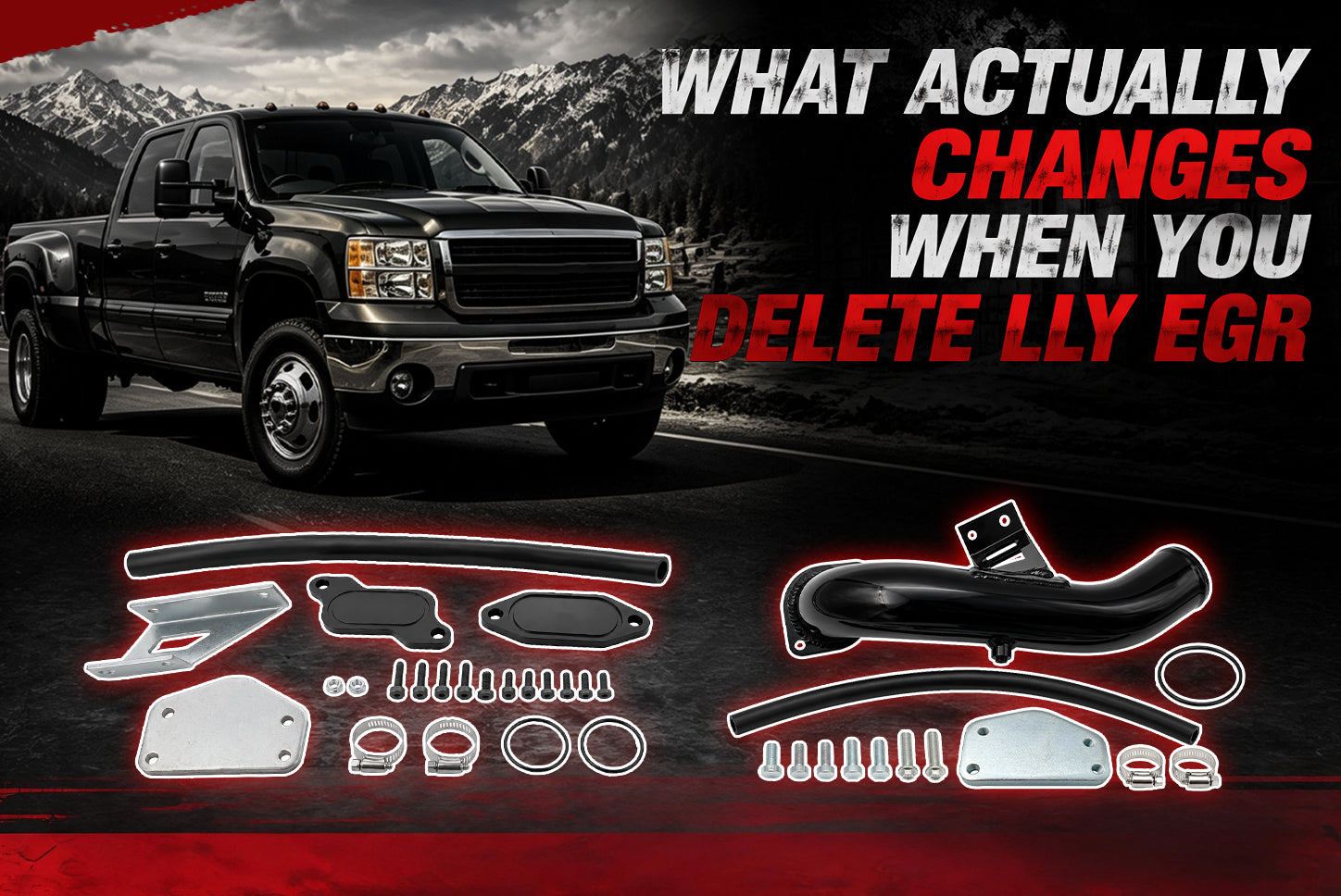
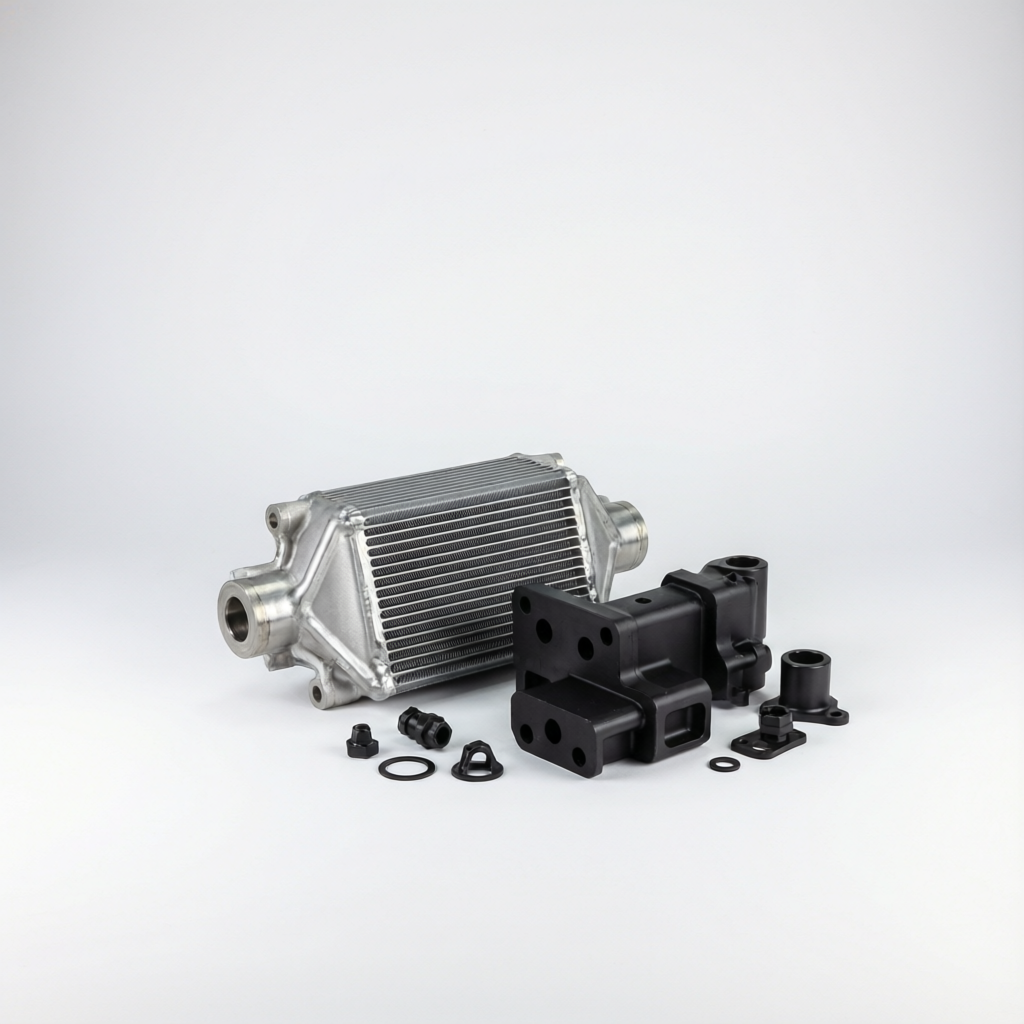
If you’re on a tight budget and want the soot stopped without spending much, this EGR delete kit is the entry point. It’s a block-off and cooler-delete kit — it stops the EGR flow and removes the cooler — but it does not include a replacement up-pipe, so the factory EGR riser (and its backpressure risk) stays in place.

Fitment: 2006–2007.5 Chevrolet Silverado / GMC Sierra 2500HD/3500HD with the 6.6L LBZ Duramax.
What it does:
Aluminum, stainless steel, and silicone construction that eliminates soot build-up and clogged EGR valves, with all the plates and hardware needed to fully remove the cooler. Built to hold up under the heat and pressure of a diesel without warping.
Who it’s for:
The budget-conscious owner who understands the tradeoff — this stops the soot and removes the cooler, but it’s the “half-measure” end of the spectrum. It’s better than a bare $20 plate, but it leaves the factory up-pipe riser in place.
The Complete Fix — EGR Delete Kit with Passenger-Side Up-Pipe
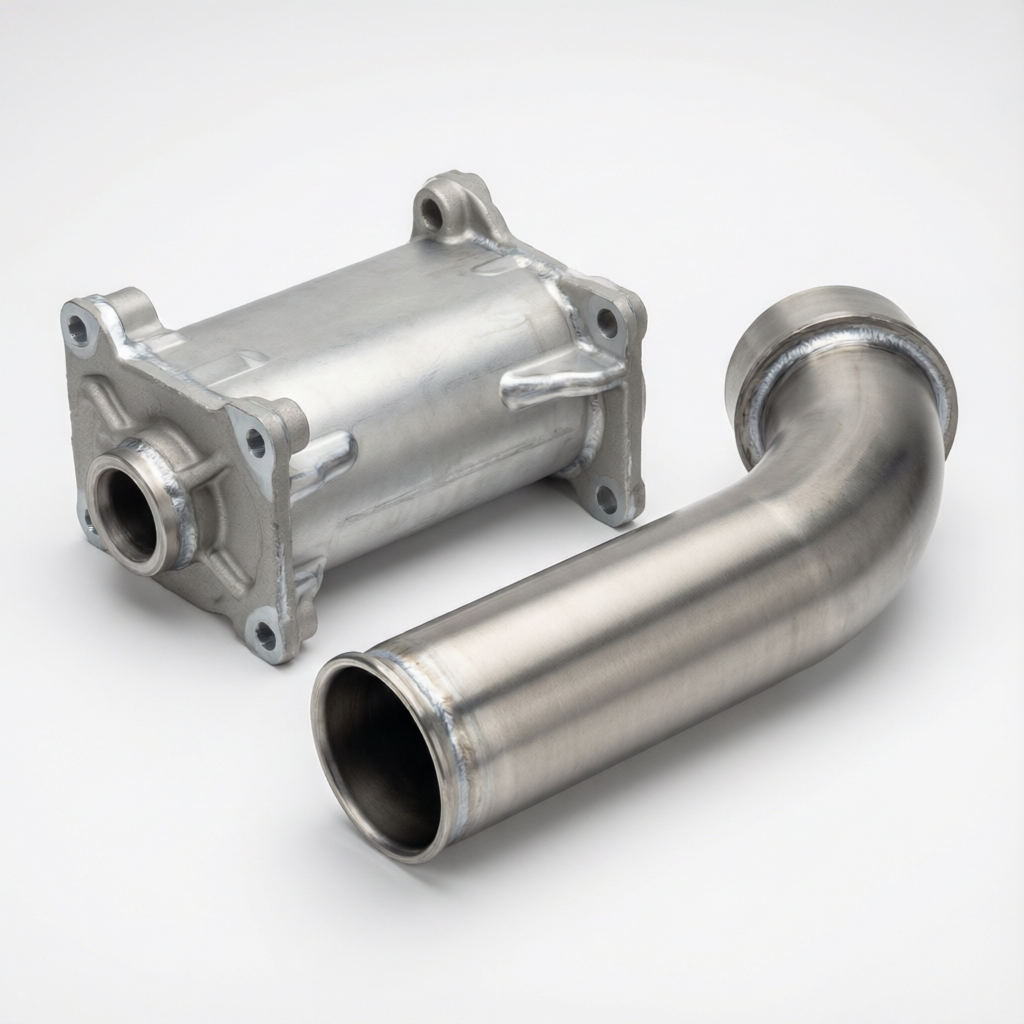
This is the one that actually solves the backpressure problem. It’s a full EGR delete that includes a replacement passenger-side up-pipe, eliminating the EGR riser entirely so there’s no dead-end for exhaust pressure to blow out.

Fitment:
2006–2007.5 Chevrolet Silverado / GMC Sierra 2500HD/3500HD with the 6.6L LBZ Duramax (VIN D/2/6).
What it does:
A bolt-on aluminum-alloy and stainless-steel kit that fits the passenger side, with pressure-tested TIG welds guaranteed not to leak. By swapping in the replacement up-pipe, it removes the EGR riser entirely — the real fix for the trapped-backpressure problem that plagues blocker-plate setups.
Who it’s for: The owner who wants it done right the first time. This is the full delete that removes the backpressure risk, opens up the airflow, and gives you the clean engine bay and reliability that a blocker plate can’t deliver.
The honest framing: $64.60 stops the soot, $238.99 removes the problem. If you’re going to keep the truck — and most LBZ owners plan to — the up-pipe kit is the one that actually earns the “delete” name.
A Note on Legality You Shouldn’t Skip
We have to be straight with you, because it’s the difference between an informed decision and an expensive mistake.
Removing, blocking, or tuning out the EGR system can violate the Clean Air Act for vehicles driven on public roads in the United States. That’s federal law. The EPA has specifically identified EGR removal as tampering, and it’s illegal to manufacture or sell parts intended to defeat emissions controls.
Practically, this means:
- These modifications are intended for off-road, competition, and racing use where legally permitted.
- A deleted LBZ will typically fail emissions inspection, visual inspection, and OBD readiness checks in states or provinces that test.
- You may have trouble trading the truck in, and a warranty claim tied to the modification can be denied.
Check federal, state, and local rules before you buy or install anything. If your LBZ is a street-registered daily driver in an inspection area, the honest answer is usually “don’t.” For a dedicated off-road or competition build where the use case is legally clear, a properly matched delete-and-tune is a legitimate strategy. Decide with your eyes open.
Conclusion
The LBZ is one of the best diesel engines GM ever built — and the EGR is the one factory system working against it. Over 100,000+ miles, that system coats the intake in soot, sticks the valve, raises EGTs, and eventually cracks the cooler. Addressing it is the single highest-value reliability move you can make on the truck.
The blocker plate is the tempting shortcut, and it’s a trap. It stops the soot but traps the backpressure. The full delete is the real repair. Swapping in a replacement up-pipe eliminates the EGR riser entirely — no dead-end, no trapped pressure, no blown bellow. Paired with a proper tune, it opens up the airflow, drops EGTs, and gives you the clean, reliable engine the LBZ was meant to be.
Ready to keep your LBZ breathing clean? Browse the full line of Duramax LBZ EGR delete kits and up-pipes at iFJF — from budget block-off kits to complete deletes with replacement up-pipes, built to fit the 2006–2007.5 trucks and ready to ship.
FAQ About The LBZ Duramax EGR Delete vs. Blocker
Q1: What’s the actual difference between an EGR blocker plate and a full EGR delete?
A blocker plate stops exhaust from reaching the intake but leaves the EGR cooler, valve, and factory up-pipe riser in place. A full delete removes all of that and swaps in a replacement up-pipe, eliminating the EGR riser entirely and removing the trapped-backpressure risk.
Q2: Will a blocker plate blow out my up-pipe bellow?
It’s a well-documented risk. Blocking the EGR traps exhaust drive pressure against the factory up-pipe’s flexible bellow, which is designed for heat expansion, not sustained backpressure. Over time the bellow can fatigue, crack, and blow out.
Q3: Do I need a tune after an LBZ EGR delete?
Yes, always. The factory ECU monitors the EGR valve and flow, and will throw codes like P0401 and turn on the check engine light if the hardware is gone without a tune. A proper EGR-delete tune disables the codes and optimizes fueling for the deleted state.
Q4: How much horsepower does an EGR delete add to an LBZ?
By itself, almost none. The delete restores airflow, but the real gains come from the tune it requires — typically 15–30 horsepower depending on tune level and supporting mods. The delete is a reliability upgrade first, not a power button.
Q5: Does an EGR delete improve fuel mileage?
Slightly, in the 1–3 MPG range, mostly from cleaner intake flow. But if fuel economy is your only goal, a delete is a poor investment — you’d spend more on the kit and tune than you’d recover in diesel. The value is in reliability and airflow.
Q6: Why is my LBZ leaking what looks like oil after blocking the EGR?
When the cooler is blocked but left in place, trapped soot and condensation mix into an acidic sludge. Exhaust gaskets seal gas, not liquid, so the sludge seeps out and drips, mimicking an oil leak. Removing the cooler entirely eliminates this.
Q7: How hard is an LBZ EGR delete to install?
Moderate to difficult, roughly 7 out of 10. A competent DIYer can do it in 2–4 hours; a shop in about 1.5 hours. The hard part is the up-pipe bolts against the firewall — soak them in penetrating oil 24 hours in advance and use a 12mm 12-point with a swivel socket.
Q8: Is an LBZ EGR delete legal?
Not for on-road use in the U.S. Removing or blocking emissions equipment violates the federal Clean Air Act, and deleted trucks typically fail inspection and OBD readiness checks. These kits are for off-road, competition, and racing use where legally permitted. Check your local laws first.