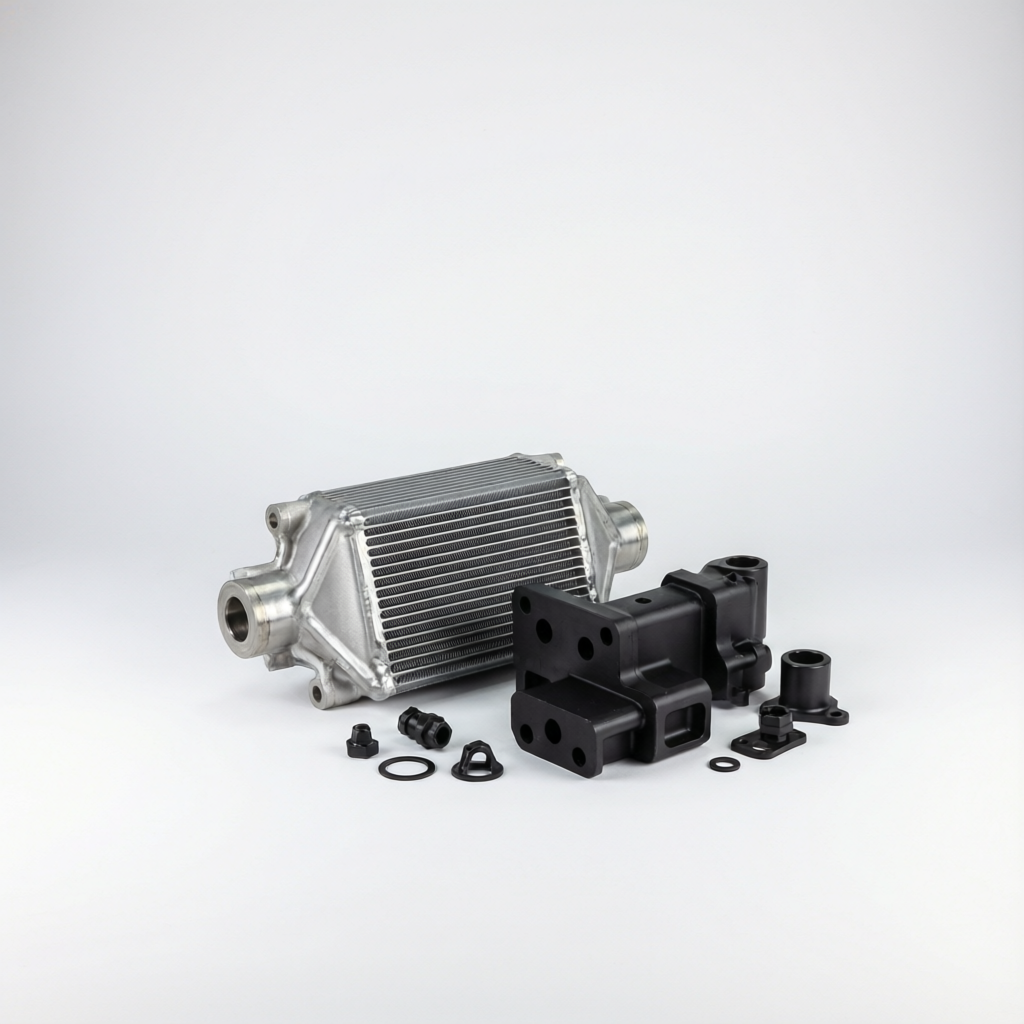

Ford engineered the 6.7L Powerstroke’s CCV (closed crankcase ventilation) system with good intentions. In practice, it routes a mist of hot engine oil, moisture, and combustion byproducts straight into your turbo compressor inlet. Over tens of thousands of miles, this oil residue cuts intercooler efficiency, restricts airflow, and slowly robs your 6.7 of the power and fuel economy it left the factory with.
A CCV delete kit re-routes crankcase vapors away from the intake entirely — no more oil mist entering the turbo, no more residue in the intercooler, and no more deposits on the intake valves. The engine breathes clean air. Combustion stays efficient. And your turbo stops eating a steady diet of crankcase oil.
The 6.7 Powerstroke CCV System: Good Intentions, Bad Results
Why does the CCV system exist?
The 6.7L Powerstroke is a high-compression diesel — 16.2:1 static, with cylinder pressures well north of 2,000 psi under load. Some combustion gas always sneaks past the piston rings into the crankcase. This is blow-by, and every piston engine produces it. The question is what you do with it.
Ford’s answer:
a closed crankcase ventilation system. A hose runs from the valve cover to the turbo inlet. A simple oil separator — essentially a baffle inside the valve cover — is supposed to knock oil droplets out of the vapor stream before it reaches the turbo. Crankcase pressure pushes the remaining vapor (oil mist included) into the intake tract, where the engine burns it.
The impact of the CCV system
At highway speeds, crankcase pressure rises, vapor velocity through the CCV hose increases, and the baffle can’t keep up. Oil mist pulls through, condenses on the compressor wheel, and begins its journey through the entire intake tract.
- Every intercooler on a high-mileage 6.7 Powerstroke has oil pooled in the bottom.
- Every CAC cold-side tube has a film of oil coating the inside.
- Every intake valve has carbon deposits baked on from oil that made it all the way to combustion.
What Oil Mist Does to Your 6.7L
Turbo Compressor Wheel
Oil droplets hitting a compressor wheel spinning at 120,000+ RPM don’t just pass through harmlessly. The oil bakes onto the wheel surface as carbon, gradually changing the blade profile. Compressor efficiency drops. Boost response slows. Over enough miles, the oil carbon buildup can cause enough aerodynamic imbalance to stress the turbo bearings.
Intercooler
The intercooler is designed to cool compressed air. It is not designed to function as an oil catch can. Oil film on the intercooler’s internal fins reduces heat transfer efficiency. A 6.7L intercooler with oil-coated internals can lose 10–15% of its cooling capacity, which means higher intake air temperatures — and lower power — under sustained load.
CAC Cold-side Tube
Oil condenses in the lowest point of the charge air system: the cold-side CAC tube. This pooled oil doesn’t stay put. Under heavy throttle, boost pressure picks it up and slugs it into the intake manifold. A sudden slug of liquid oil into a cylinder raises the effective compression ratio momentarily — enough to spike cylinder pressure and stress the head gaskets.
Intake Valves And Port
Oil that doesn’t pool in the intercooler makes it all the way to the intake valves, where heat bakes it into carbon deposits. These deposits disrupt airflow into the cylinder, create hot spots that can cause pre-ignition, and in severe cases, prevent the valve from seating fully.
Intercooler Boots And Connections.
Oil saturates the silicone boots connecting the CAC pipes. Over time, the oil softens the silicone, causing the boots to swell, lose their clamp grip, and eventually blow off under boost. A blown CAC boot on the highway leaves you with zero boost and a truck that won’t get out of its own way.
Signs Your 6.7’s CCV System Is Causing Trouble
- Oily residue at CAC boot connections. Pop the hood and squeeze a CAC boot. If your fingers come back wet with oil, the CCV system is feeding oil through the intake.
- Intercooler cold-side pipe has oil pooling inside. Remove the cold-side CAC tube and look inside. Any standing oil at the low point means the CCV baffle has been overwhelmed for thousands of miles.
- Gradual loss of boost response. Not a sudden failure — a slow, progressive dulling of throttle response that you might not notice month to month. It’s often an oil-fouled intercooler or compressor wheel.
- Increased EGTs at cruise. Oil-contaminated intake air burns hotter. If your EGTs at 70 mph on flat ground have crept up 100°F over the past year and nothing else changed, the intercooler is a likely suspect.
- Oil consumption with no visible leak. A 6.7 Powerstroke that burns a quart every 3,000 miles through the CCV system won’t leave a drip on the driveway. The oil goes out the tailpipe as burned vapor.
CCV/PCV Delete Kit | 2011-2023 Ford Powerstroke 6.7L
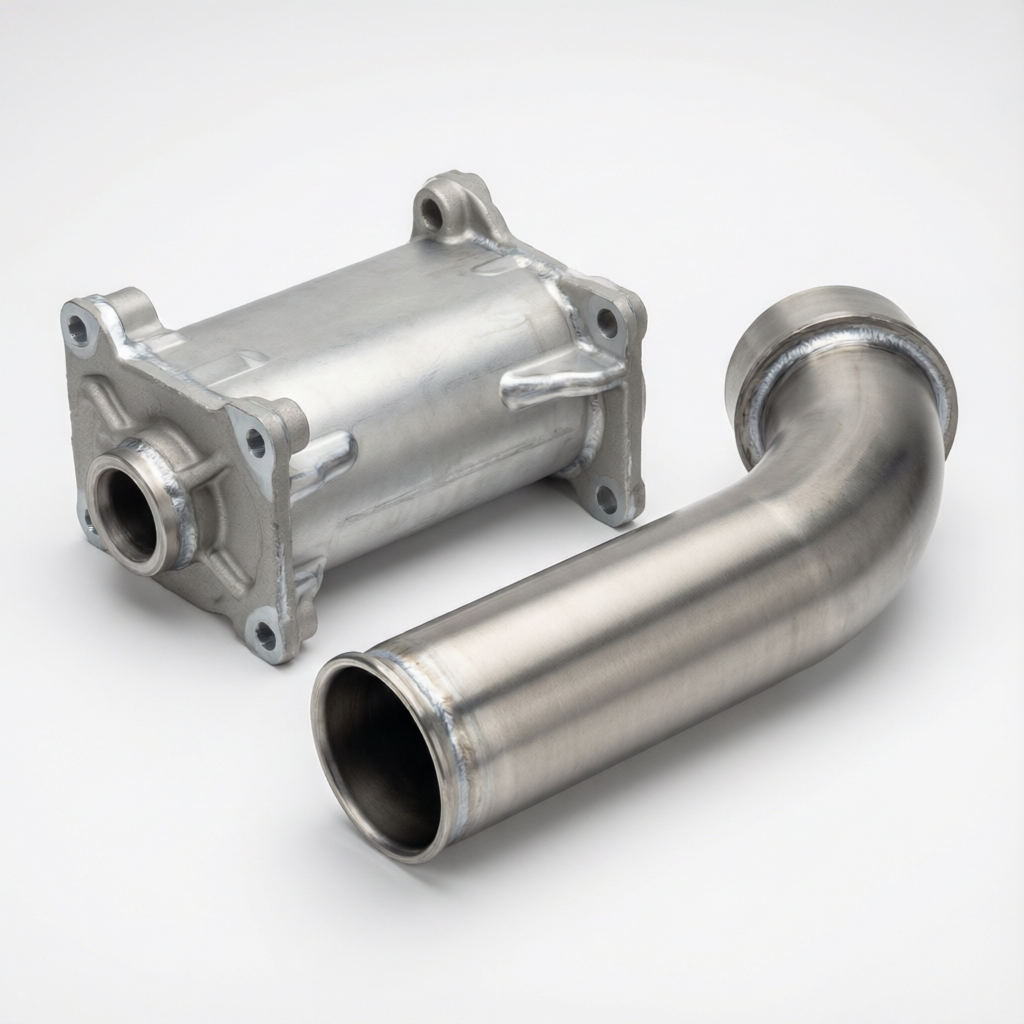
The IFJF CCV/PCV Delete Kit replaces the factory CCV hose from the valve cover to the turbo inlet with a vent-to-atmosphere setup that removes crankcase vapors from the intake tract entirely.

- Aluminum alloy and rubber construction — the delete block-off and routing components use aluminum and reinforced rubber, not plastic fittings that embrittle from under-hood heat cycling
- Black anodized components for long-term durability — the anodized finish resists corrosion, chemical degradation from oil exposure, and doesn’t flake or peel like painted alternatives
- Solid crankcase pressure relief — eliminates unwanted crankcase pressure that robs power by fighting piston downstroke, especially at high RPM under load
- Cleans up the engine bay — removes the factory CCV hose and routing hardware, freeing space for other modifications and making the engine bay easier to work in
- Oil-residue-free intake air — the turbo, intercooler, CAC pipes, and intake valves see only clean, filtered air from that point forward, ensuring strong combustion and best engine efficiency
Best for: The 6.7 Powerstroke owner who wants a straightforward CCV delete with durable materials and a clean engine bay — no catch can to empty, no oil returning to the intake, no compromises.
CCV/PCV Delete Kit | 2011-2023 Ford Powerstroke 6.7L
The Venturi-Style CCV/PCV Delete Kit takes the same concept — remove crankcase vapors from the intake — and executes it with a venturi-based routing design that manages crankcase pressure more actively.

- Venturi-style design eliminates restrictive baffles — instead of relying on a labyrinth of baffles to separate oil from vapor, the venturi routing uses airflow velocity to pull crankcase pressure without creating back-pressure against the pistons
- Streamline routing with no sharp angles — the hose routing avoids the tight bends that trap oil and create flow restrictions, so crankcase pressure vents smoothly even at sustained high RPM
- Better pressure flow, no oil dripping — the continuous slope of the routing prevents oil from pooling in low spots and dripping, a common complaint with poorly designed CCV vent hoses
- Decreased oil deposits throughout the engine — without oil mist circulating through the intake, intercooler, and engine bay, everything stays cleaner — turbo compressor, intercooler fins, CAC boots, and valve ports
- Ensures oil-free residual air for optimal combustion efficiency — the engine breathes only clean, filtered air through the intake, maximizing combustion quality and fuel efficiency
Best for: The 6.7 Powerstroke owner who wants the structural advantages of a venturi-based vent system — smoother pressure relief, no baffle restriction, and a routing design that won’t drip or clog over the life of the truck.
Installation Overview
A 6.7 Powerstroke CCV delete is one of the simpler modifications on the platform — no heavy teardown, no fluids to drain, and no tuning required. The job replaces the factory CCV hose between the valve cover and turbo inlet with a block-off at the intake and a vent hose from the valve cover.
Tools needed: Basic socket set, flathead screwdriver, hose clamp pliers (optional but helpful), zip ties for routing the vent hose.
Time: 45–90 minutes for a first-time install. Experienced hands can do it in 30.
Key steps:
- Remove the factory CCV hose from the valve cover fitting and turbo inlet
- Install the block-off plug on the turbo inlet to seal the intake side
- Attach the vent hose to the valve cover CCV fitting
- Route the vent hose downward and rearward — aim to exit below the firewall and behind the front axle to minimize any crankcase odor reaching the cabin
- Secure the hose with zip ties away from hot exhaust components, steering linkage, and moving suspension parts
- Start the engine and confirm no vacuum leaks at the intake block-off
No ECU tuning is required. The 6.7 Powerstroke PCM does not monitor CCV system integrity, so there are no DTCs to disable and no check engine light to clear.
Conclusion: Your Turbo Doesn’t Need an Oil Diet
The 6.7L Powerstroke is a million-mile engine platform held back by a handful of design compromises — and the factory CCV system is the easiest one to fix. For the cost of a delete kit and an hour of your time, you stop feeding oil into your turbo, intercooler, and intake valves. No more oil-soaked CAC boots. No more intercooler efficiency loss. No more baked-on valve deposits.
For the full lineup of 6.7L Powerstroke performance parts — from EGR and DPF delete kits to intake systems and turbo upgrades — visit IFJF.com. Free shipping on orders over $200 and same-day dispatch on orders placed before 2 PM EST.
Frequently Asked Questions
Q1: Will a CCV delete void my warranty?
A1: Modifying the crankcase ventilation system can affect emissions warranty coverage on trucks still under the 5-year/100,000-mile federal emissions warranty. For 2011–2018 trucks, factory warranties have long since expired. For 2019–2023 trucks still under coverage, check your warranty terms before modifying.
Q2: Will my truck smell like oil after a CCV delete?
A2: A properly routed vent hose ending below the firewall and behind the front axle produces minimal to no cabin odor. You may notice a faint crankcase smell when stopped at idle with the windows down, but it’s comparable to the smell of any vented diesel engine bay and is not noticeable while driving.
Q3: Do I need a tune after a CCV delete?
A3: No. Unlike an EGR or DPF delete, the CCV system is purely mechanical ventilation — the PCM does not monitor it with sensors, and there are no DTCs to disable. The engine runs exactly as it did before, just with clean air instead of oil mist entering the turbo.
Q4: Is a CCV delete legal for on-road use?
A4: The CCV system is part of the vehicle’s emissions control equipment. Modifying or removing it may not be compliant with federal and state emissions regulations for on-road vehicles. CCV deletes are intended for off-road and competition applications. Check your local regulations before modifying a street-driven truck.