
For most 6.7L Ford Super Duty owners, "deleting" isn't just about the sound—it's about unlocking the true potential of the Power Stroke engine. You’re looking for better MPG, lower EGTs, and the reliability that the factory setup can’t always provide. But once you’ve committed to the upgrade, you’re hit with a critical question: Stainless or Aluminized? It might seem like a minor detail, but your choice of metal will determine whether your investment lasts a decade or rots out in two winters. In this guide, we’re breaking down the metallurgy behind the pipe to help you choose the right armor for your truck’s undercarriage.
What is the stainless?
Before diving into the comparison, it helps to understand what stainless steel actually is.
synthetic elements
At its core, it is an alloy steel created by mixing 10% to 30% chromium with roughly 70% iron. Other elements like nickel, molybdenum, titanium, and nitrogen are added to combine the best properties of various metals.
Effect: improving formability, overall strength, and low-temperature toughness.
Aluminized Steel
Aluminized steel (typically 16-gauge) is made of low-carbon steel that has been hot-dip coated with an aluminum-silicon alloy.
-
Thermodynamic Advantage: The aluminum layer offers excellent heat reflection, allowing it to dissipate surface heat more rapidly than stainless steel.
-
The Fatal Flaw—Corrosion Limits: The protection of aluminized steel relies entirely on that thin outer coating. Due to constant heat cycles and physical impacts from road debris, this layer eventually wears off. Once the base metal (carbon steel) is exposed to moisture and oxygen, rust becomes inevitable.
-
Life Expectancy: In humid or wet climates, these systems typically last only a few years before leaks and performance degradation set in.
409 Stainless Steel
If you are looking for a material that offers reliable protection without the premium price tag, 409 stainless steel is the industry standard.
-
Self-Healing Corrosion Protection: Unlike the "outer coating" of aluminized steel, the protection in stainless steel comes from within. The chromium reacts with oxygen to form a dense, self-healing oxide layer on the surface. Even if the pipe is scratched, a new oxide layer forms immediately, ensuring long-term rust resistance.
-
Superior Strength and Fatigue Resistance: The tensile strength of 409 stainless far exceeds that of aluminized steel. When facing the constant "heat cycles" (alternating between extreme heat and cold) of a 6.7L exhaust system, it resists micro-cracking and warping, maintaining structural integrity for years.
-
High-Heat Performance: It easily handles the extreme exhaust temperatures generated by the 6.7L engine under high-load conditions. This advantage is especially pronounced during aggressive driving or heavy towing.
Featured Solutions for Your Ford Power Stroke
Before diving into the technical details, here are our top-rated stainless steel systems designed for maximum performance and durability.
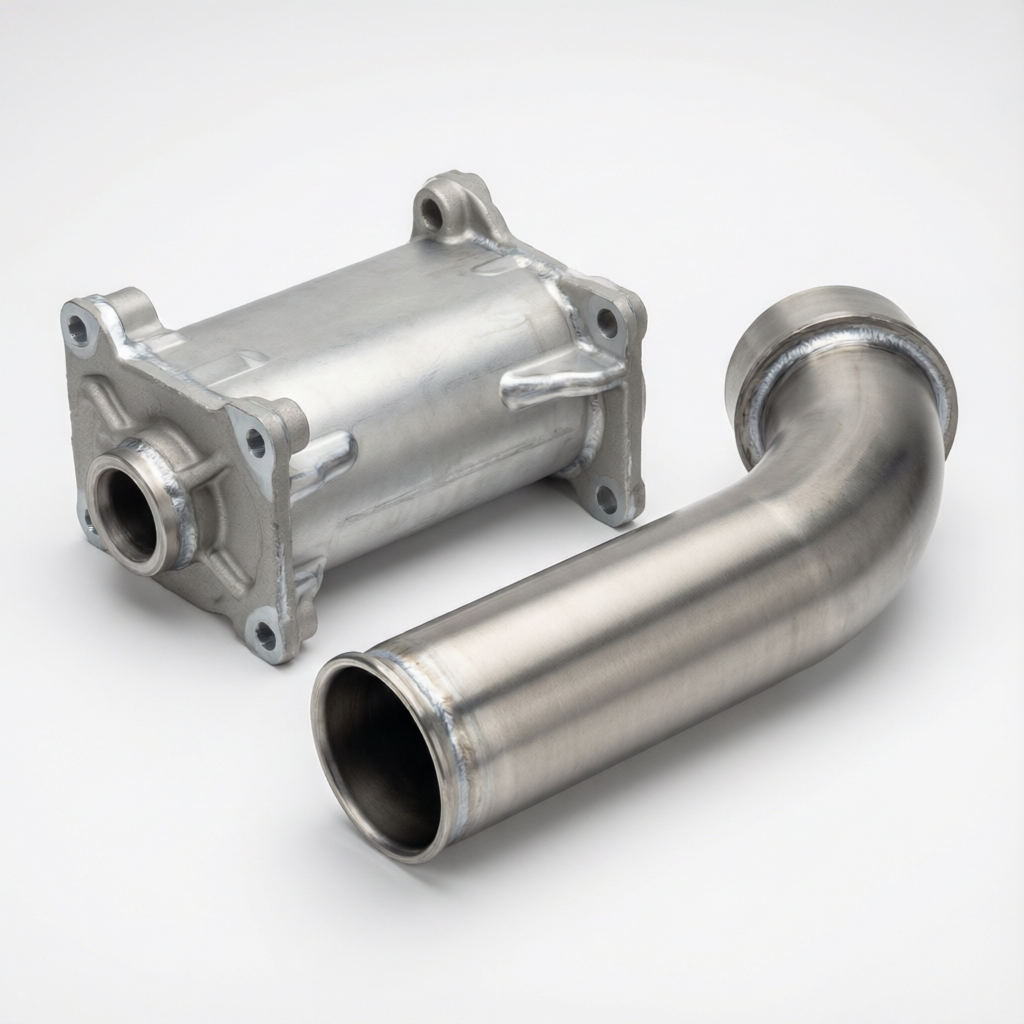
4" Cat & DPF Delete Pipe | 2011-2023 Ford Powerstroke 6.7L
This DPF upgrade kit is the definitive upgrade for the modern Super Duty owner looking for a balance of flow and fitment.

-
Premium 409 Stainless Steel: Offers superior heat resistance and longevity compared to OEM aluminized parts.
-
Zero Maintenance: Eliminates the need for constant DPF cleaning or expensive filter replacements.
-
Engine Protection: By removing the DPF, you eliminate the risk of filter-related failures that lead to costly engine repairs.
-
Maximized Flow: Designed for competition use, this 4-inch system slashes backpressure, significantly boosting horsepower and torque.
4" Cat & DPF Delete Pipe | 2008-2010 Ford Powerstroke 6.4L
Specifically engineered for the high-output 6.4L platform, this 4" Cat & DPF kit focuses on ruggedness and reliability.

-
Heavy-Duty Stainless Construction: The T409 steel build is tougher and more heat-tolerant than standard aluminized exhaust systems.
-
4.0” Inlet Diameter: Optimized for maximum exhaust scavenging and reduced EGTs.
-
Reliability Boost: Removing the DPF removes the "Achilles' heel" of the 6.4L emissions system, preventing expensive shop bills.
-
Competition Ready: Provides the high-velocity flow required for off-road and race applications.
5" DPF Delete Pipe | 2011-2022 Ford Powerstroke 6.7L
This 5“ DPF Delete kit is designed for audiophiles who seek the most rich sound and the most powerful airflow.

-
Massive 5.0" Diameter: This downpipe-back system offers the ultimate flow capacity for high-horsepower competition builds.
-
T-409 Stainless Steel: Built to withstand the harshest environments without structural degradation.
-
Customizable Sound: Designed as a straight-pipe (muffler-less) system for a raw race sound.
-
Maximum Performance: Dramatically reduces backpressure, allowing your turbo to spool faster and breathe easier.
Choosing by Environment: The Geographic Reality
Where you live in the U.S. should dictate your choice:
-
The Snow Belt: If you face heavy road salt and chemical de-icers, 409 Stainless is a necessity. Aluminized steel can rot through in as little as two winters in these conditions.
-
Coastal Regions: High-salinity salt air is brutal on coated steels. Stainless steel is the only way to ensure your exhaust doesn't become a maintenance nightmare.
-
The High Desert / Inland: In dry, low-salt areas like Arizona or West Texas, Aluminized Steel is a highly cost-effective choice that can last significantly longer than it would elsewhere.
-
High-Performance/Competition Use: For trucks seeing extreme heat cycles from racing or heavy hauling, the fatigue resistance of 409 Stainless is unmatched.
One-Time Investment vs. Repeat Repairs
When choosing your material, always consider the "Total Cost of Ownership":
-
Fitment and Sealing: Due to its physical stability, 409 stainless maintains a better seal over long-term heat cycles, reducing the likelihood of leaks caused by pipe deformation.
-
Resale Value: In the American used truck market, a clean, stainless steel exhaust system (especially the proven 409 grade) is viewed as a high-quality upgrade. It proves to potential buyers that the owner was willing to invest in the vehicle’s longevity.
Summary
Choosing the right exhaust material for your Ford Power Stroke is more than a technicality—it’s an investment in your truck’s longevity. While aluminized steel serves a purpose in dry climates, the T-409 Stainless Steel systems featured on our site offer the "self-healing" durability and thermal stability your 6.7L engine demands.
At www.ifjf.com, we don't just sell parts; we provide the armor your Super Duty needs to conquer the road. Whether you are looking for the maximum flow of a 5-inch competition system or a reliable 4-inch daily driver upgrade, our curated selection of 409 Stainless solutions ensures you get the best insurance policy against rust and costly repairs. Browse our full collection of Power Stroke performance kits today and give your truck the upgrade it deserves.
AQs About LMM EGR Delete Kit
Q1: What are the most common mistakes when deleting a 6.7 Powerstroke DPF?
A1: The biggest rookie mistake is yanking the hardware before flashing the tune, which instantly sends the truck into limp mode. Other common fails include leaving sensor ports exposed, under-torquing flange bolts, or snapping studs because you didn't use enough penetrating oil.
Q2: Can I return the truck to stock settings after installing a delete kit?
A2: Technically, yes—but it’s not just a software flip. While you can flash the tuner back to stock, full compliance for inspections or resale requires physically re-installing the entire heavy DPF assembly and every sensor you took off.
Q3: Will performing a delete void my factory warranty?
A3: Absolutely. Deleting will almost always void the warranty on your emissions system and related powertrain components. It’s the "pay to play" reality of the diesel world that every owner needs to weigh before starting.
Q4: What is the average cost for a complete DPF delete setup?
A4: Depending on the quality of the tuner and exhaust piping, expect to shell out between $1,000 and $2,000. It’s a significant upfront investment, but it eventually pays for itself through improved MPG and by dodging those massive DPF replacement bills.
Q5: Is this a DIY-friendly project, or do I need a pro shop?
A5: If you’ve got solid mechanical skills and a good set of tools, you can definitely handle this in your driveway. The key is following the tuner’s instructions to the letter to ensure the electronics and hardware are perfectly synced for a smooth-running rig.